European Urban Heat Deaths Exceeded 50,000 During 2026 Summer
A study by Imperial College London researchers estimates that extreme heat caused over 50,000 excess deaths in European cities during the summer of 2026, with two-thirds attributed to climate change.
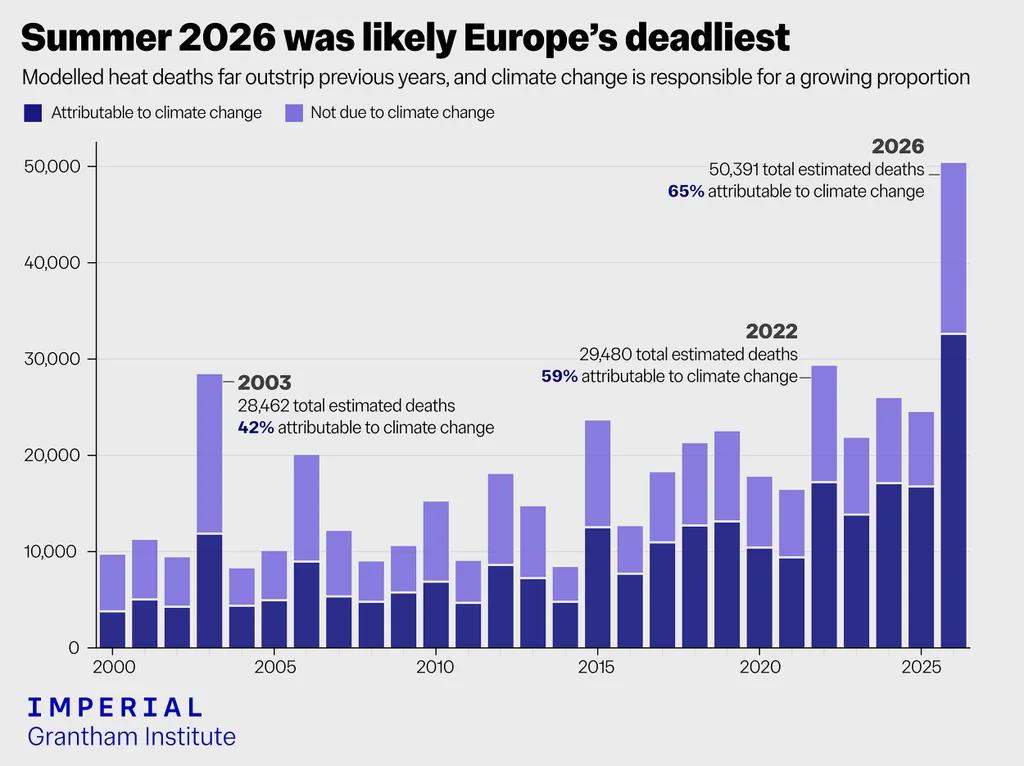
Researchers from Imperial College London and the London School of Hygiene & Tropical Medicine analyzed data from 854 urban areas across 30 countries to assess the human toll of the summer of 2026. The findings indicate that five consecutive heat waves resulted in the highest number of heat-related fatalities since records began in 2000, surpassing the previous record set in 2022.
By utilizing temperature records and climate modeling, researchers estimated that over 50,000 deaths were linked to extreme heat. Garyfallos Konstantinoudis, an author of the study, noted that official death certificates often underreport heat as a cause of death, frequently focusing on heat stroke while ignoring the broader physiological strain extreme temperatures place on cardiovascular and metabolic systems.
Statistical modeling suggests that approximately 32,000 of these fatalities—roughly two-thirds of the total—would not have occurred without the additional warming driven by human-induced climate change. During that summer, temperatures across Europe were 2.9°C higher than the previous decade’s average, with some days peaking at 12°C above average.
Clair Barnes, a climate researcher and author of the study, emphasized that the data serves as a stark metric of the public health impacts associated with current warming trends. The findings underscore the urgency for a transition away from fossil fuels to mitigate future climate risks in Europe, which currently ranks as the fastest-warming continent.