Europe's largest port faces pressure to reduce emissions
The Port of Rotterdam, Europe's largest, is facing growing pressure to decrease its reliance on fossil fuels. An environmental group has sued the port authority over inadequate emission reduction plans.
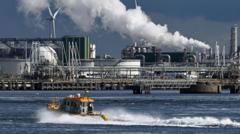
The Port of Rotterdam, the busiest port in Europe for freight, is under increasing scrutiny due to its significant role in handling fossil fuels and the resulting carbon emissions.
Environmental group Advocates for the Future has filed a lawsuit against the Port of Rotterdam Authority, arguing that the port is not doing enough to phase out fossil-based energy. The group is demanding a concrete plan to wind down the flow of coal, oil, and gas.
Industrial activities within the Port of Rotterdam currently emit approximately 29 million tonnes of CO2 annually, representing about half of the Netherlands' domestic emissions. The ultimate CO2 emissions linked to the fossil fuels transiting the port are estimated at 600 megatonnes per year.
The Port Authority has outlined plans to cut emissions from its own operations by 90% between 2019 and 2030. These plans include developing a hydrogen hub, investing in shore power for ships, and supporting the bunkering of alternative fuels like LNG, biofuels, and methanol. Carbon Capture and Storage (CCS) is also being pursued as a short-term measure.
While port officials acknowledge the need for change, they also highlight the complexity of the transition and the importance of maintaining international competitiveness. Major companies operating within the port, many with headquarters abroad, could relocate if regulations become too stringent.