Finhabits Report: Saver's Match Could Boost Latino Retirement Investing
New analysis estimates 13.6 million income-eligible Latino adults could benefit from the federal Saver's Match program starting in 2027, creating a significant opportunity to expand long-term investment participation.
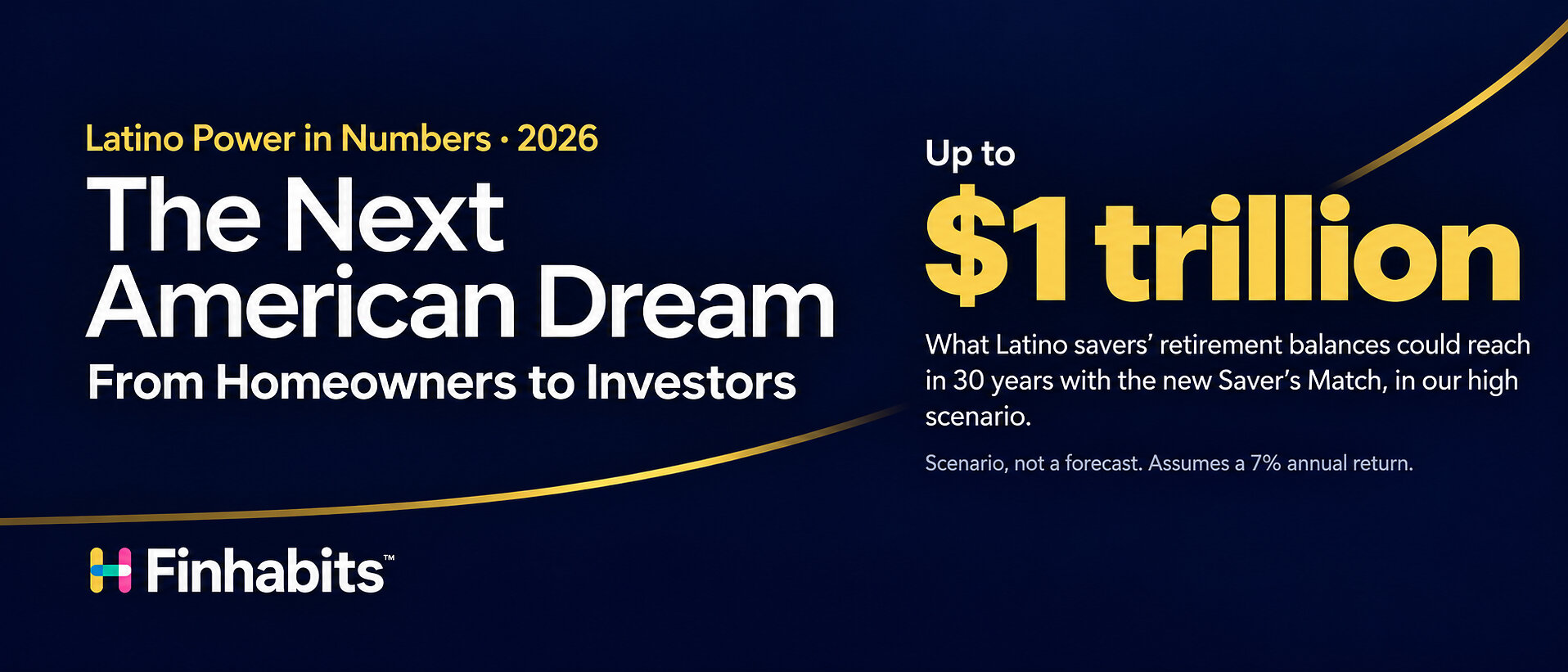
A new report by Finhabits, titled "The Next American Dream: Expanding Latino Participation in Retirement Investing," estimates that approximately 13.6 million U.S. Latino adults may be eligible for the federal Saver's Match program beginning in 2027. This program offers a federal match on retirement contributions for qualifying low- and middle-income workers, and is projected to significantly increase participation in long-term investing among this demographic.
The report highlights the rapid growth of the Latino population's economic influence, noting they accounted for 57% of new jobs created in the U.S. between 2015 and 2025, with median earnings seeing substantial increases. Despite this economic growth, wealth among Latino households remains concentrated in home equity, with a considerably lower proportion allocated to investments compared to White households.
Carlos García, founder and CEO of Finhabits, stated that the Saver's Match could establish a new entry point into retirement investing for millions of Latino workers. The aim extends beyond merely opening accounts to helping families build a second pillar of long-term wealth alongside homeownership. Modeled scenarios suggest that consistent saving, combined with the federal match, could result in estimated retirement balances ranging from $615 billion to $1.02 trillion over 30 years.
The findings also present an opportunity for financial service providers, asset managers, and fintech companies. The report encourages these entities to simplify processes, offer culturally relevant guidance in both English and Spanish, and build trust with consumers potentially new to the retirement system. García added that while policy provides the incentive, the industry's challenge is to make participation understandable, accessible, and sustainable.