Forklift Lithium Battery Systems Require Specialized BMS Architecture
The demanding duty cycles of forklifts, including continuous high current and multi-shift operation, necessitate a different battery management system (BMS) architecture compared to standard lithium applications.
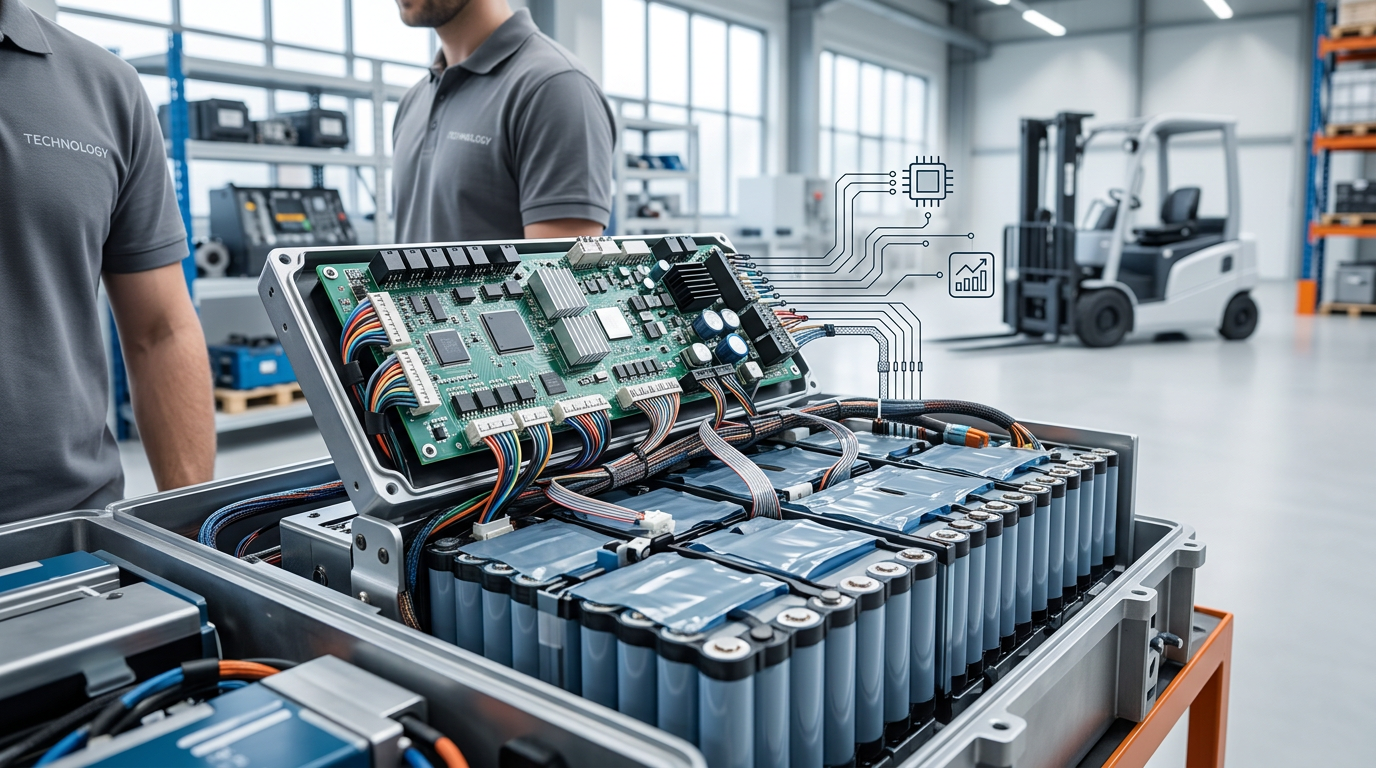
DALY BMS has published guidance highlighting the distinct architectural requirements for battery management systems (BMS) in forklift lithium battery systems. Standard BMS designs, suitable for applications like e-bikes or RVs, often fall short when subjected to the rigors of industrial forklift operations.
Key factors differentiating forklift duty cycles include sustained high current draw for lifting and traction, managing bidirectional current surges from regenerative braking, and operating continuously for 16–24 hours per day. These conditions, combined with frequent opportunity charging and the need for integration with vehicle control systems, place unique demands on the BMS.
General-purpose BMS are insufficient due to these specific needs. Forklift BMS must handle high continuous currents with adequate thermal management, tolerate bidirectional power flow, maintain stability across extended operating periods, and integrate reliably with multiple vehicle controllers. The harsh industrial environment, characterized by vibration and impact, also requires a robust physical design.
DALY BMS offers product lines like the Mini-Red AM/AS and TM/TS series for light to medium-duty forklifts (200-400A) and the D Series for heavy-duty machinery (400-800A). The selection depends on expected current loads and operational intensity, particularly the need for active balancing in multi-shift scenarios. The company emphasizes sizing BMS for sustained current rather than peak discharge ratings.