Fraunhofer develops faster, cost-effective system for mRNA drug production
Seven Fraunhofer institutes have developed an automated, digitally controlled production system for mRNA-based drugs. The new RNAuto system aims to improve speed, flexibility, and cost-effectiveness compared to existing methods.
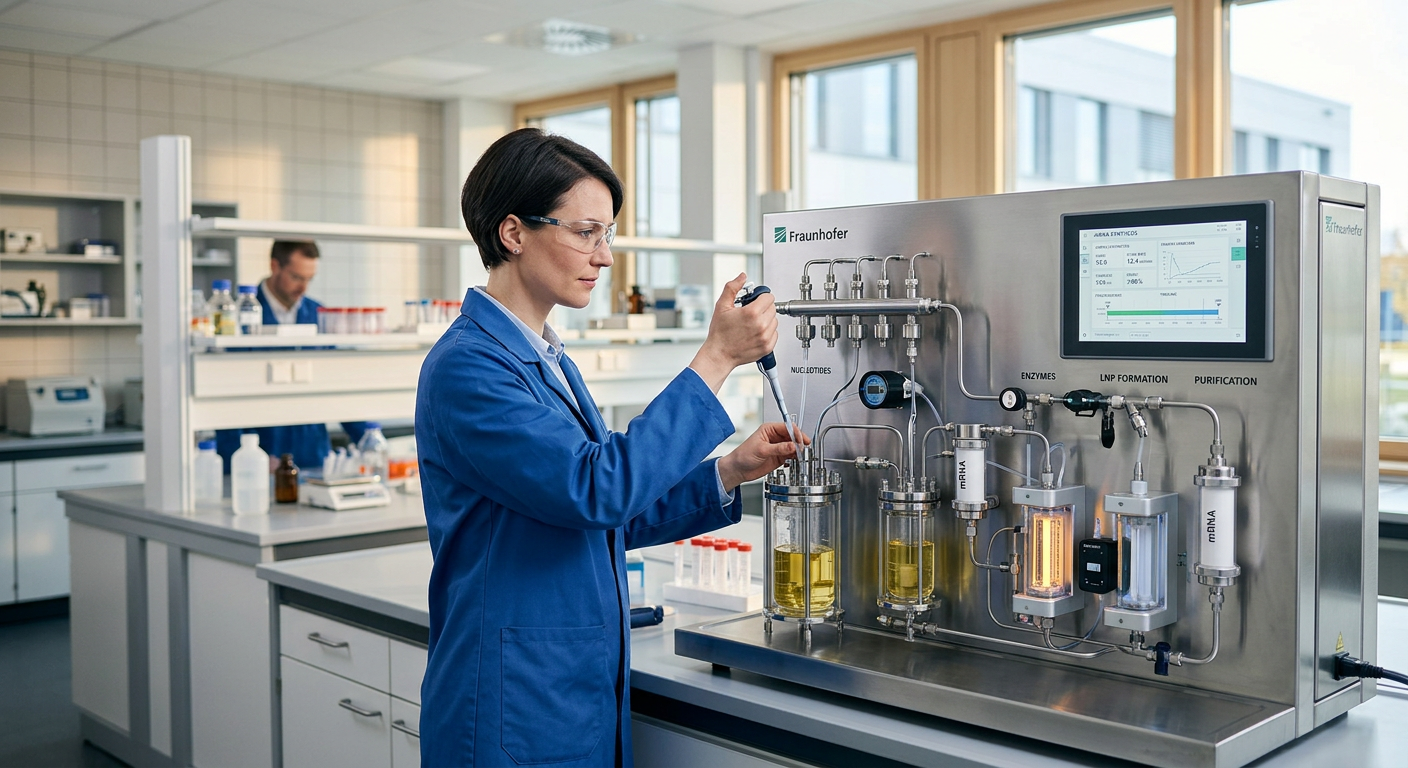
Researchers across seven Fraunhofer institutes have created an automated, digitally controlled production system designed to streamline the manufacturing of mRNA-based drugs and vaccines. The RNAuto project addresses challenges in complexity, speed, and scalability that have previously limited the availability of these advanced therapeutics.
The new system integrates quality control directly into the production workflow, reducing the lengthy manual processes common in traditional mRNA drug manufacturing. The system formulates mRNA molecules with lipids into protective nanoparticles using a continuous flow micromixer. Integrated sensors and digital twins enable real-time quality monitoring, such as analyzing nanoparticle size distribution, eliminating the need for process interruptions for manual sampling and analysis.
"All process data is systematically recorded and stored in structured digital documentation, establishing a strong foundation for the data-driven optimization of subsequent production cycles," stated Rolf Hendrik van Lengen from the Fraunhofer Institute for Experimental Software Engineering IESE. The modular design allows for flexible adaptation to new bioprocesses and different active ingredient variants, according to Niels König from the Fraunhofer Institute for Production Technology IPT.
The project's focus on optimizing product and process quality aims to enable faster, scalable, and more cost-effective production of mRNA-based treatments. This advancement is crucial for expanding access to novel therapies for conditions like cancer, genetic disorders, and infectious diseases.