Fraunhofer LBF develops new roll embossing system for bipolar plates
The Fraunhofer LBF has developed a new roll embossing system that can halve the production costs of bipolar plates, a key component in fuel cells and electrolyzers.
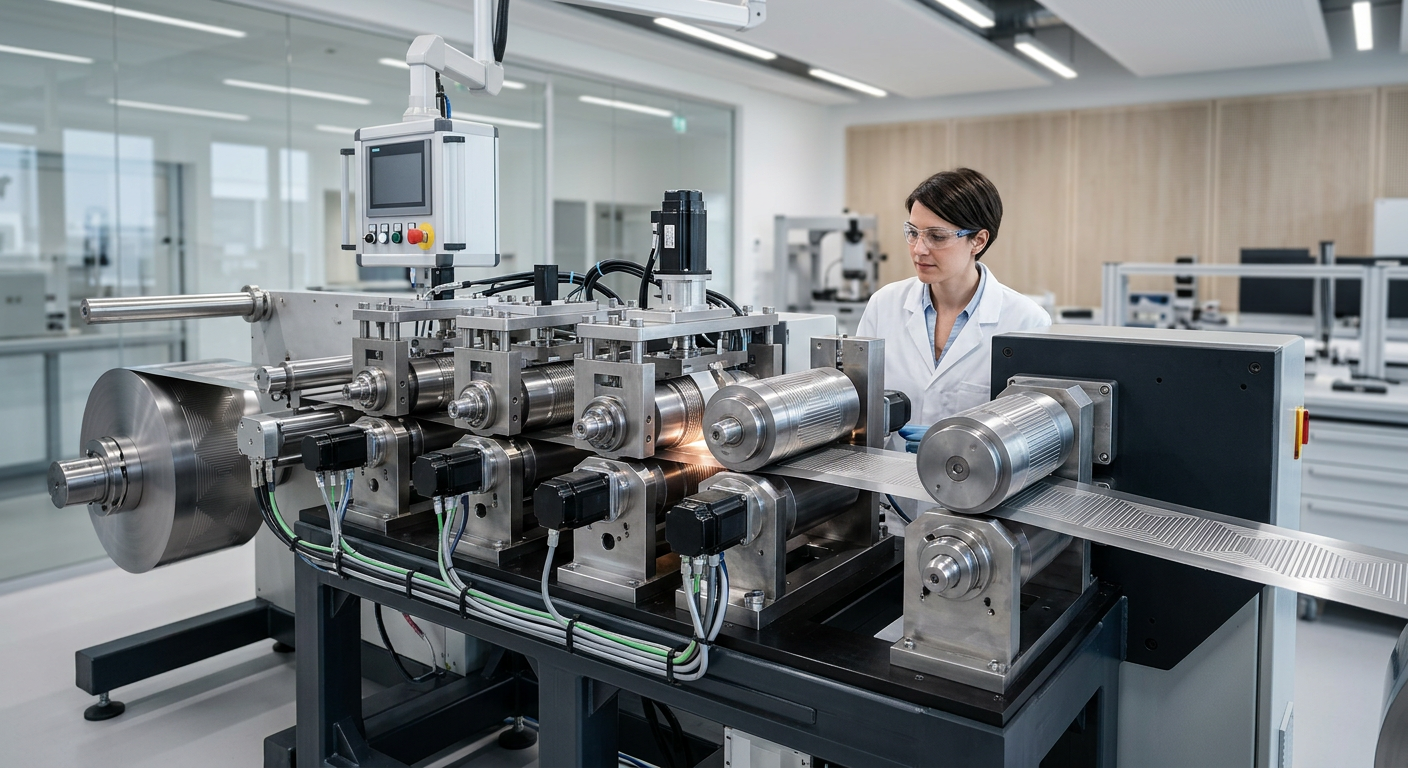
Fraunhofer LBF (Institute for Structural Durability and System Reliability) in Chemnitz, Germany, has introduced a new roll embossing system named BPPflexRoll. The new technology is expected to significantly reduce the production costs of bipolar plates (BPPs), which are essential for hydrogen fuel cells and electrolyzers, potentially accelerating the broader adoption of hydrogen technology.
Historically, bipolar plate production has been complex and expensive, limiting the cost-effective use of technologies like hydrogen-powered vehicles. The BPPflexRoll system, a collaboration between Fraunhofer LBF and Profiroll Technologies GmbH, aims to address this issue by transitioning from discontinuous batch production to a continuous manufacturing process.
"One of the significant advantages is the increased process speed. Up to 120 bipolar plate halves can be produced per minute," stated Stefan Polster, head of the Sheet Metal Processing and Tool Design group at Fraunhofer LBF. The goal is to reduce manufacturing costs by half, making hydrogen fuel cell technology more competitive.
The BPPflexRoll system utilizes a pair of embossing rollers to form a thin metal band. This process replaces the traditional method involving discontinuous forming and joining of separate halves. The system is already operational at Fraunhofer LBF and features control technology comparable to industrial facilities.