Freezing Light: Flash Photography's 180-Year Journey and the Professional Strobe Revolution
From photography's infancy, lack of light was a major hurdle. Solutions have evolved from magnesium powder to electronic strobes, revolutionizing light control for professionals.
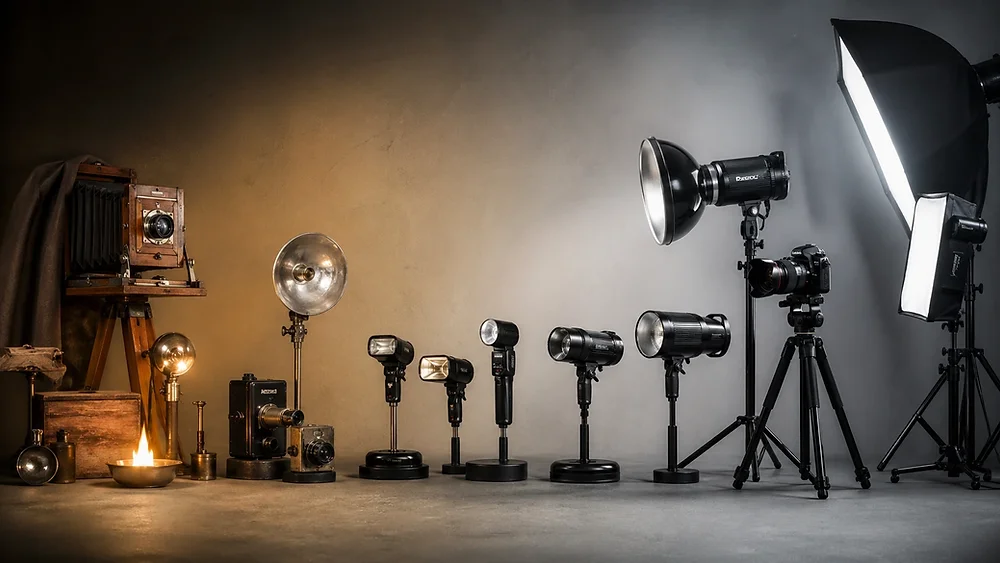
Photography has come a long way from its early days, when insufficient light restricted creators to daylight hours. Initial attempts to generate artificial light involved burning magnesium powder, a method that was powerful but hazardous, often leading to smoke-filled studios and fires.
A significant safety advancement arrived in the early 20th century with the development of the glass flashbulb. This offered a more controlled light source, and General Electric's commercialization of the technology transformed press photography, despite each bulb being a single-use item.
The true revolution began in 1931 with Harold Edgerton's introduction of the electronic stroboscopic flash. This system, still based on xenon tube and capacitor discharge, enabled thousands of uses, extremely short flash durations, and precise light control, effectively allowing photographers to "cut" time.
By the late 1950s and early 1960s, modern studio lighting systems, known as "paraflaş" or strobes, emerged. These offered adjustable power, modeling lights, and precise synchronization, making photography a measurable discipline. Companies like Germany's Multiblitz and Switzerland's Broncolor became key players in professional lighting technology during this period.