Frequentis AG: Success Factors for Digital Air Traffic Control Towers
Frequentis DFS Aerosense has published an article outlining the success factors for digital air traffic control tower projects. Key elements include stakeholder involvement and change management.
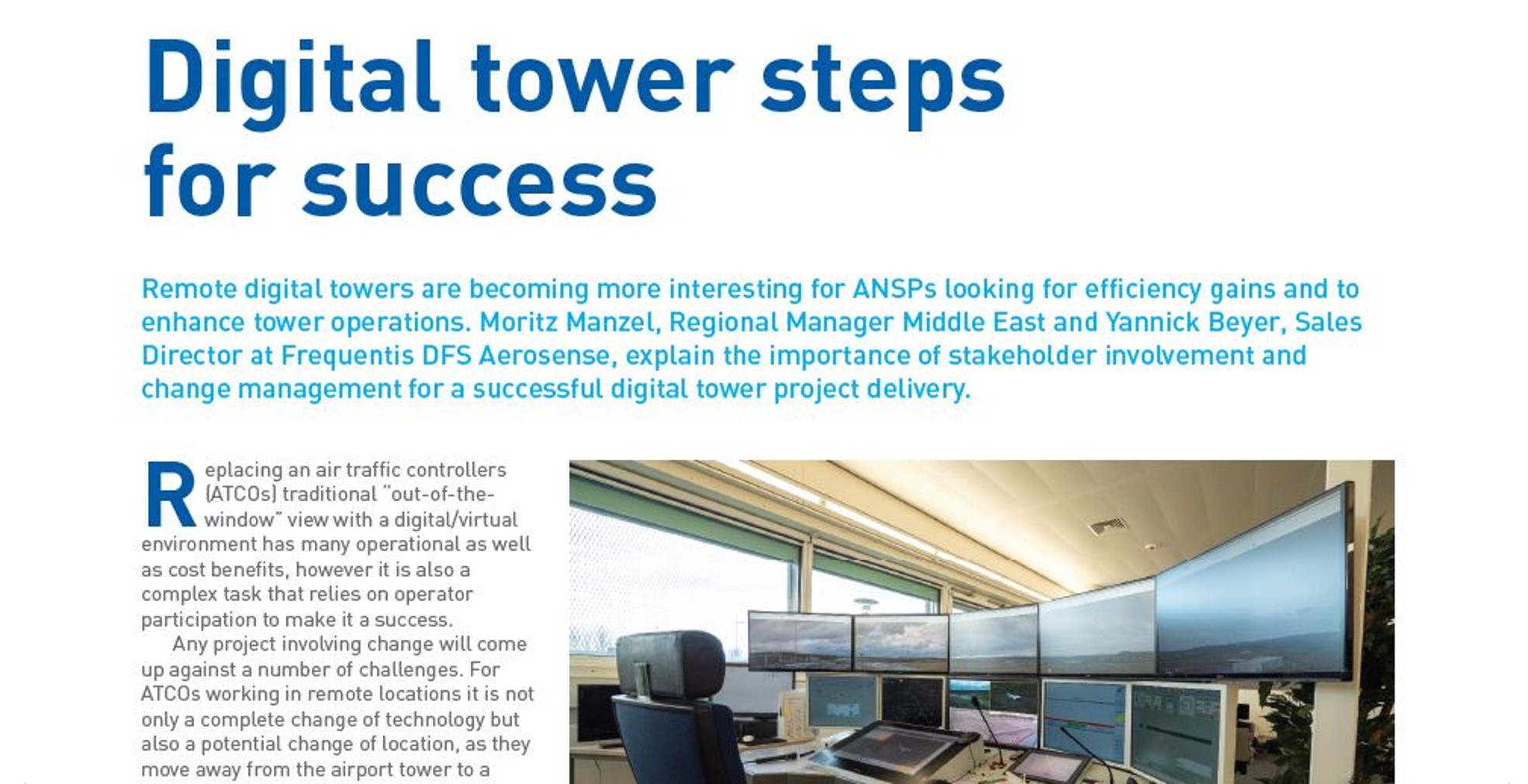
Frequentis DFS Aerosense has released an article detailing the critical elements for the successful delivery of digital air traffic control tower projects. The publication, featured in Arabian Aerospace magazine on pages 14-15, emphasizes the importance of comprehensive stakeholder engagement and effective change management.
The article shares insights and best practices from Frequentis DFS Aerosense regarding the implementation of digital tower solutions. Developing modern air traffic control towers requires meticulous planning and ongoing collaboration with all involved parties, including airports, airlines, and regulatory bodies.
A core focus is change management, as the adoption of digital towers signifies a substantial shift in traditional air traffic control processes and practices. Successful transitions necessitate staff training, clear communication, and the redefinition of workflows to ensure new technologies integrate seamlessly with established operational models.
Frequentis DFS Aerosense is committed to developing solutions that enhance air traffic efficiency and safety. Digital towers represent an advancement enabling centralized control and the leverage of emerging technologies such as artificial intelligence and data analytics within air traffic management.