Garage Door Opener Emergency Release Guide
The emergency release for garage door openers allows manual operation during power outages or malfunctions. Danny's Garage Doors 101 Services clarifies it is not a repair tool for the door or opener itself.
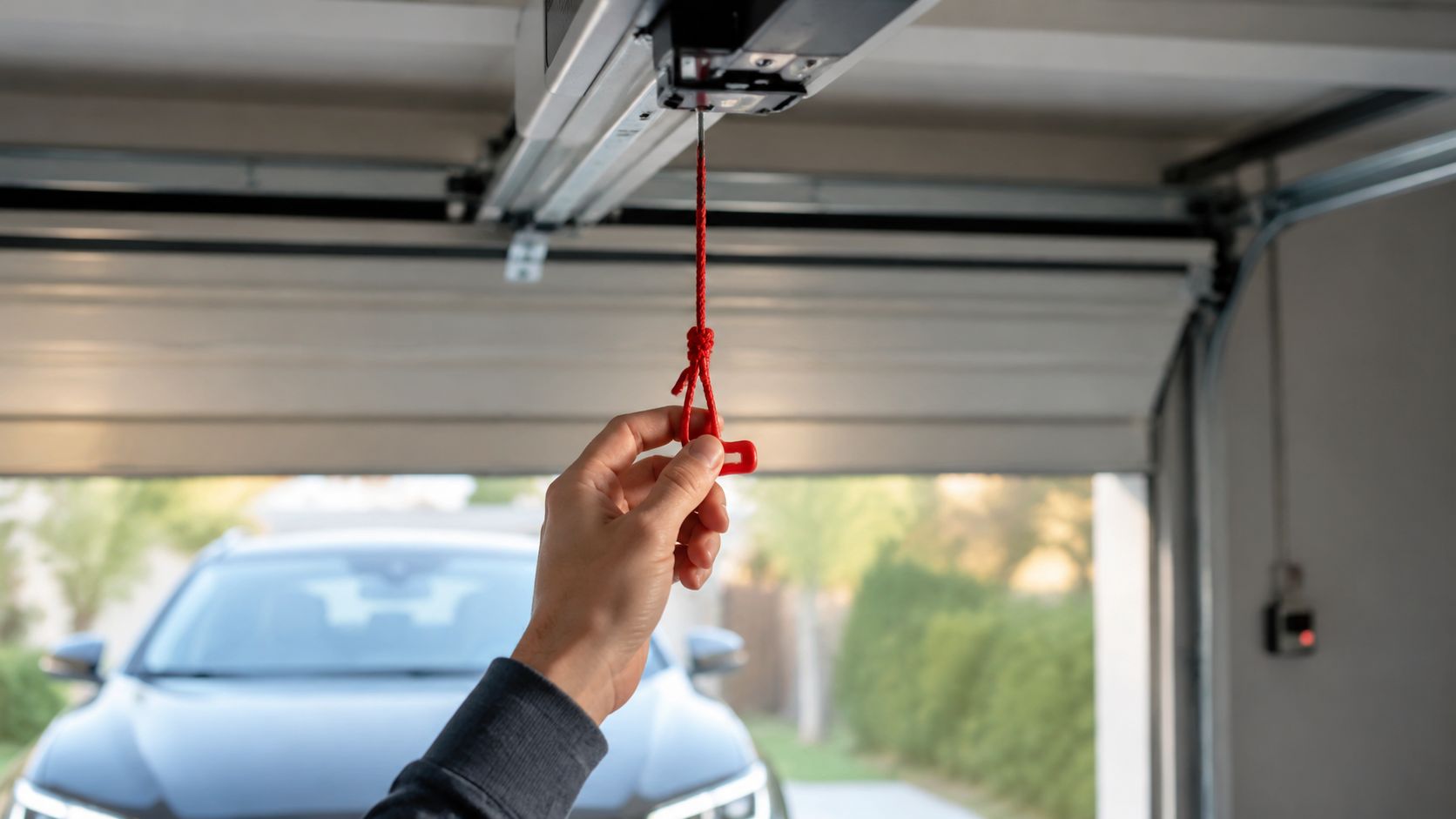
The emergency release mechanism on garage door openers is designed to allow manual operation of the door in situations such as power outages or opener malfunctions. Danny's Garage Doors 101 Services emphasizes that this feature is not a substitute for repairs if the door itself is damaged, unbalanced, or if the opener's safety systems are not functioning correctly.
Federal safety regulations in the U.S., as outlined by the Consumer Product Safety Commission (CPSC), mandate that automatic openers manufactured since 1991 include a reversing system. The emergency release is integral to this safety setup, enabling the disconnection of the door from the opener's drive mechanism. The CPSC recommends homeowners conduct monthly inspections of their garage doors and openers, including testing the reversing function.
Typically identifiable by a red cord or handle hanging from the opener's rail, the emergency release disengages the trolley from the track. This allows the door to be lifted or lowered by hand. However, if the door is heavy, sticking, or out of balance, simply using the release may not resolve the underlying issue and could pose safety risks.
Danny's Garage Doors 101 Services advises that if the door's reversing mechanism fails, use of the opener should cease until a professional inspection. The emergency release serves as a backup for power or opener failure, not as a solution for a faulty door system. Proper installation requires the release to be at least 1.83 meters above the floor to prevent accidental engagement.