Gas bubbles imaged on red giant star's surface for first time
Chalmers University of Technology researchers have captured unique images of gas bubbles on the surface of the red giant star R Doradus. The observations provide detailed insights into stellar convection processes.
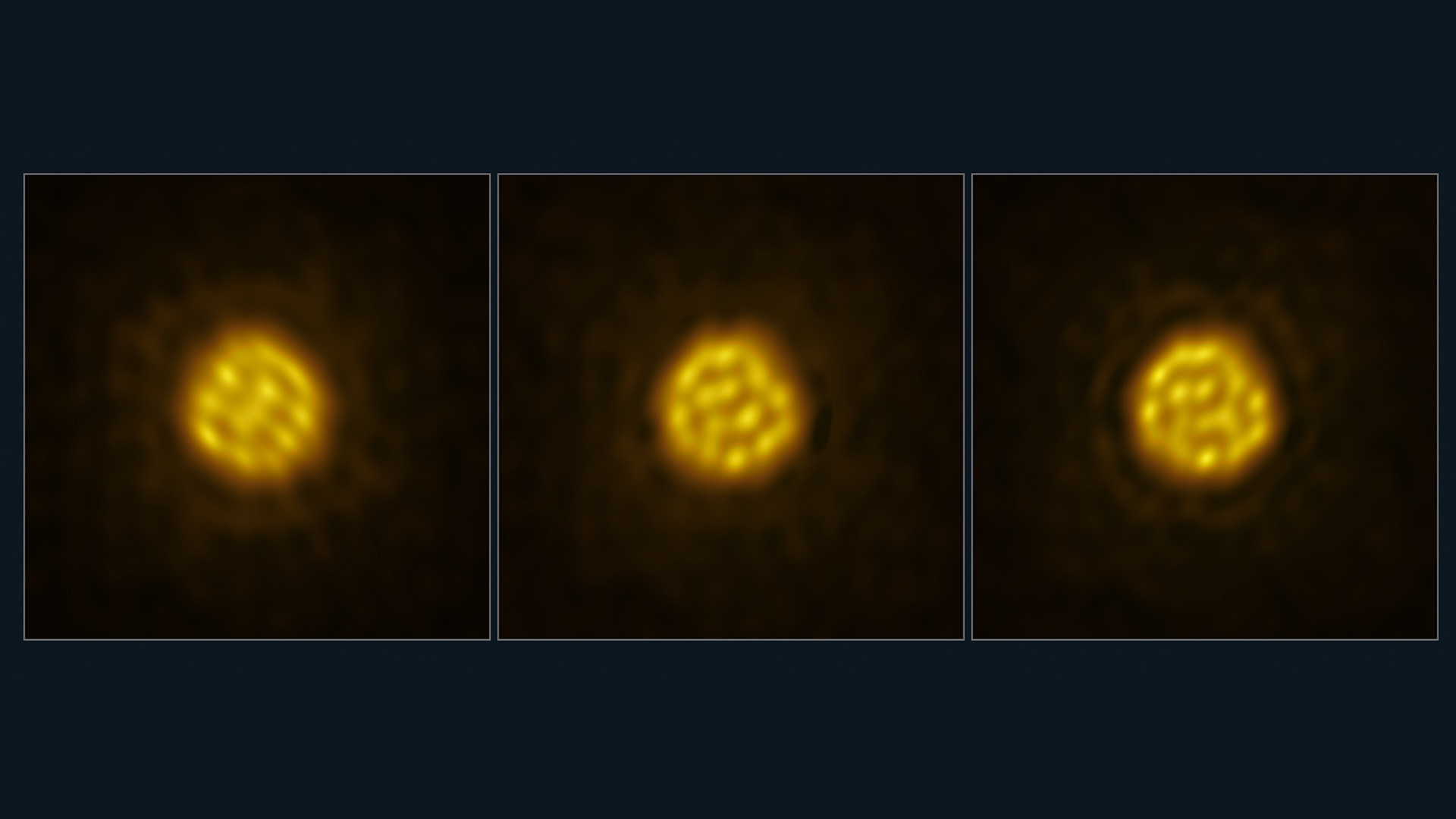
Gothenburg, Sweden – Researchers at Chalmers University of Technology have released detailed images showing gas bubbles on the surface of the red giant star R Doradus. These unique observations, made using the Atacama Large Millimeter/submillimeter Array (ALMA), offer an unprecedented view of a star's surface structure.
The study, published in the journal Nature, focuses on stellar convection. This process involves hot gas bubbles rising from a star's core to its surface, then cooling and sinking back down, similar to a lava lamp. This motion distributes elements created in the core and is thought to drive stellar winds that carry matter into space.
R Doradus is located approximately 180 light-years from Earth and has a diameter about 350 times that of our Sun. Its characteristics make it a valuable analogue for understanding our own Sun's future, as it will become a red giant in about five billion years.
ALMA allowed the team to observe R Doradus's surface over a month, capturing the movement of individual gas granules. They measured the speed of these granules, finding they moved faster than expected. This suggests that convection in stars changes with age in ways scientists are still working to understand. Future observations with instruments like the SKA Observatory are expected to provide even greater detail on how these stellar bubbles contribute to phenomena like dusty stellar winds.