Gasum Publishes Guide to LNG Bunkering for Ships
Energy company Gasum has released a comprehensive guide detailing LNG bunkering, the process of supplying liquefied natural gas (LNG) to ships as marine fuel. The guide covers delivery methods, safety protocols, and available infrastructure.
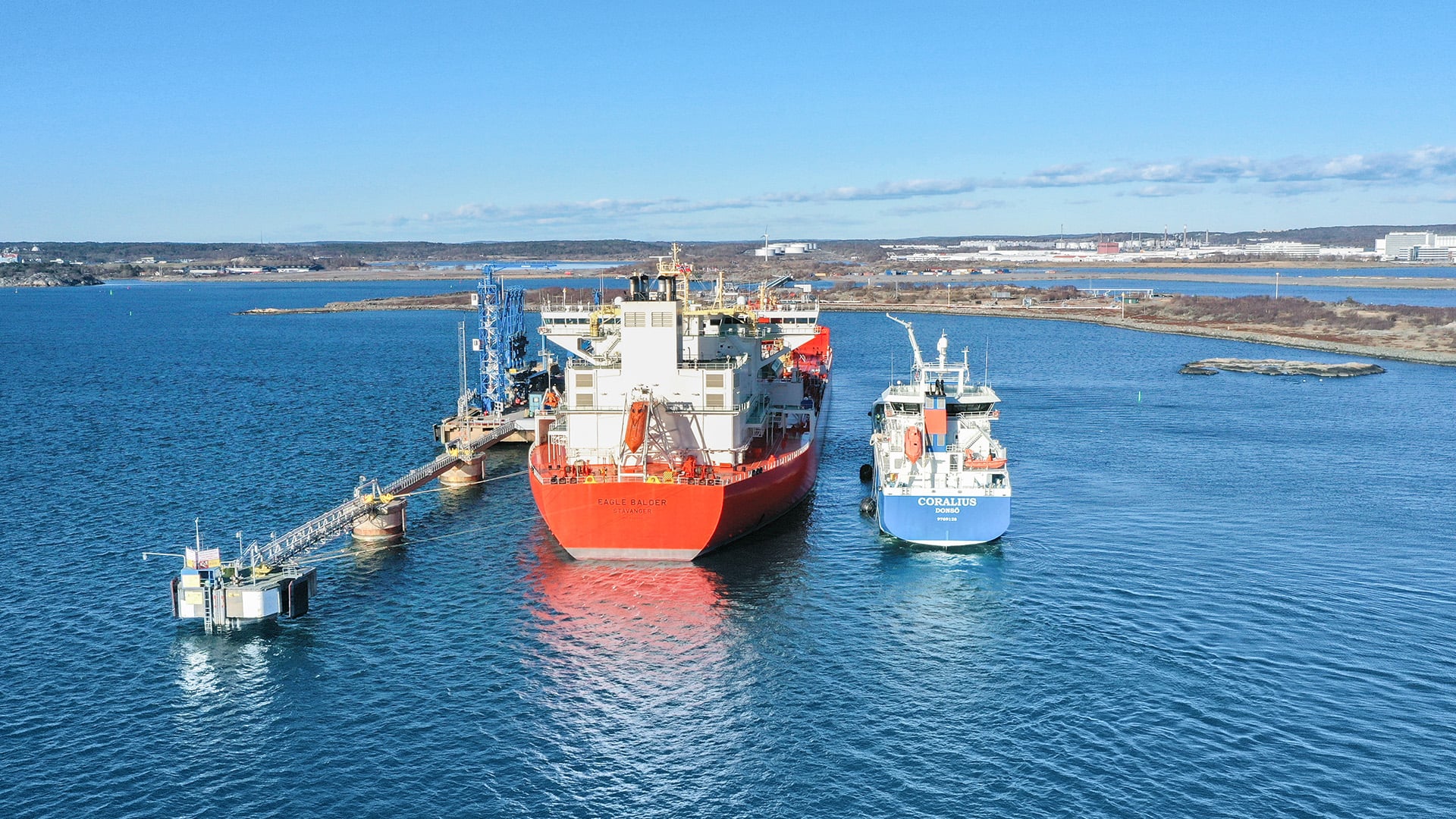
Energy company Gasum has published a detailed guide on LNG bunkering, the process of supplying liquefied natural gas (LNG) to ships for use as marine fuel. Gasum's publication elaborates on the delivery methods, safety requirements, and the available bunkering infrastructure. LNG is stored at cryogenic temperatures, -162 degrees Celsius, necessitating specialized handling and safety protocols.
The bunkering process involves multiple parties, including the ship operator, bunker supplier, terminal operator, port authorities, and classification societies that certify safety compliance. LNG can be delivered to ships through three main methods. Ship-to-ship bunkering involves a dedicated LNG bunker vessel mooring alongside the receiving ship. This is the most common method for large vessels, such as container ships and cruise liners. Gasum operates several bunker vessels in the Baltic and North Sea regions, including Coralius and Kairos.
Truck-to-ship bunkering allows for LNG to be delivered directly at the quay via specialized cryogenic road tankers. This method is suitable for smaller vessels and ferry services, offering flexibility in ports without fixed LNG infrastructure. The third method, terminal-to-ship bunkering, relies on fixed onshore storage tanks and pipelines or loading arms. Gasum utilizes this method particularly at the Risavika LNG terminal.
An LNG bunkering operation typically takes 4 to 12 hours. The process includes several steps before, during, and after the transfer to ensure safety and the correct fuel quantity. Particular attention is paid to managing "boil-off gas" (BOG) generated during storage, which is returned to the supply vessel. Gasum highlights the safe history of LNG bunkering, noting over a thousand successful operations without incident for the vessel Coralius. Key safety risks, including cryogenic burns, flammability, and asphyxiation hazards, are managed through specific mitigation measures.