German Environmental Aid Questions Capacity of Stuttgart's Future Underground Station
Deutsche Umwelthilfe (DUH) is commissioning a new study to assess the actual capacity of Stuttgart's future Stuttgart 31 underground station, based on current traffic data. A previous capacity test from 2011 is criticized as too theoretical.
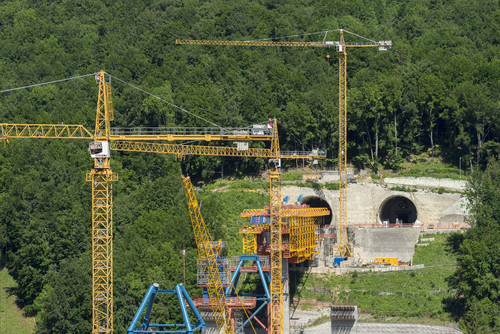
The German environmental organization Deutsche Umwelthilfe (DUH) has launched an investigation into the real-world capacity of Stuttgart's planned Stuttgart 31 underground railway station. The study aims to determine if the eight-track subterranean station can accommodate current train traffic, factoring in actual operational data and typical delays.
DUH states that a 2011 capacity stress test for the station, conducted by Swiss firm SMA, was "purely theoretical" and did not reflect the actual operational reality. Werner Stohler, former head of SMA, who signed the original study, has reportedly expressed doubts about its validity, suggesting the eight tracks would not have provided sufficient connection quality for a major hub.
Jürgen Resch, federal managing director of DUH, described the new study as a "reality check" for Stuttgart 31. He accused Deutsche Bahn (DB) and political authorities of misleading the public about the underground station's capabilities, claiming it is too small to handle even the current train volume. DUH also highlights projections for doubling rail passenger traffic by 2030, exacerbating capacity concerns.
The investigation will analyze the train traffic of a specific Friday in September, examining arrival and departure times, stopping and turnaround durations, and track usage. The goal is to virtually transfer this real traffic into the planned underground station and assess feasibility, considering factors like approach routes and boarding times, alongside actual delays. DUH argues that a "Plan B" is necessary, involving the preservation and refurbishment of the current main station.
Deutsche Umwelthilfe urges DB CEO Palla to secure the long-term preservation of the existing main station and its direct connection to the Gäubahn line. The organization believes Stuttgart 31 will fail to cope with projected future traffic volumes, making the protection of current infrastructure essential.