German housing market faces increasing pressure as rates rise
Despite rising interest rates and geopolitical tensions, the German housing market has shown resilience. However, analysis indicates growing market vulnerability and weakening credit dynamics.
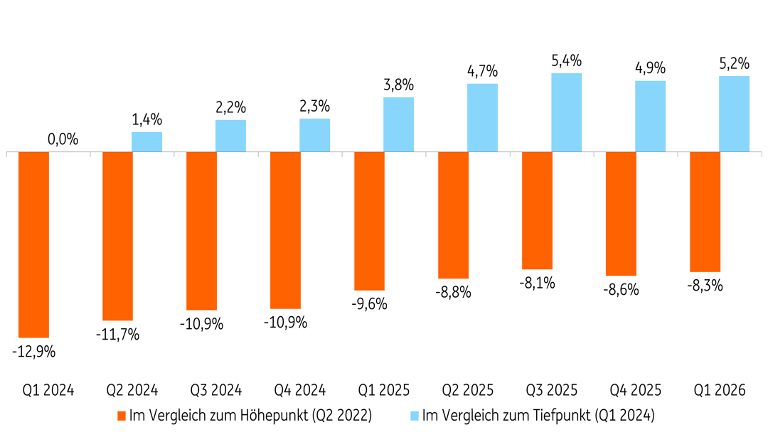
The German housing market, while appearing resilient to rising interest rates and geopolitical tensions, is facing an increasing test of its strength. Deeper analysis reveals growing pressure on affordability and weakening credit dynamics, suggesting a more fragile state.
Official data shows that German housing prices rose by 0.3 percent in the first quarter of 2026, reversing a 0.5 percent decline in the previous quarter. Year-on-year, prices are up 1.4 percent. However, property values remain approximately 8.3 percent below their 2022 peak, even as they are over 5 percent higher than the low reached in 2024.
This price stability does not indicate immunity to economic pressures. The recent shock arrived at a market already contending with reduced affordability. Since the start of the year, capital market interest rates have climbed, increasing financing costs, while property prices continued to rise against a backdrop of slowing wage growth.
These conditions have impacted new lending. Mortgage loan origination began weakly at the start of the year, showing significant volatility. A surge in March, likely driven by forward-looking effects, was followed by a sharp drop in April. This sensitivity to financing conditions suggests recovery remains uncertain.
Short-term outlooks suggest a challenging period ahead. Higher financing costs, a cooling labor market, and pressure on real incomes are expected to curb demand. Structural factors, such as persistent housing shortages, provide some support. However, the market's balance is becoming more precarious, with its overall resilience likely to be further tested in the coming months.