German Payment Habits Shifting: Contactless and Mobile Payments Gain Traction
A new Allensbach study reveals contactless and mobile payment adoption is increasing in Germany, particularly among younger demographics. Consumers express a growing desire for broader card acceptance.
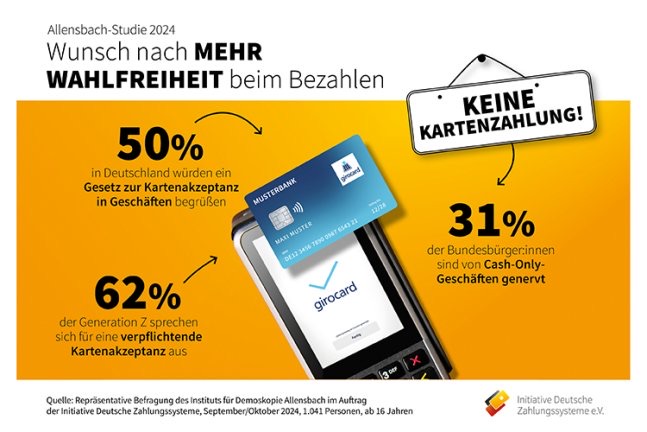
A new Allensbach study indicates significant shifts in German payment behaviors, with contactless and mobile payment methods experiencing substantial growth. The adoption of payments via smartphones and smartwatches is rising, especially among younger age groups.
The research shows that 80 percent of Germans have used contactless payments with their girocard, a sharp increase from 20 percent six years ago. Even among individuals aged 60 and over, this payment method is now used by 68 percent. For the younger demographic (16-29 years), nearly half (53 percent) have made mobile payments using a digital girocard, compared to 23 percent of the general population. Only 4 percent of those aged 60 and above who have tried mobile payments found it easy.
The study also highlights evolving attitudes towards cash and card acceptance. 31 percent of citizens feel frustrated when businesses or restaurants only accept cash, leading 22 percent to avoid such establishments. Half of all respondents support a legal obligation for businesses to accept card payments, with this sentiment being particularly strong among 16- to 29-year-olds (62 percent). Approximately 54 percent believe they could easily adapt to a cashless society, with only 4 percent of young people expressing concerns about a future without cash.
In summary, the landscape of payment methods in Germany is diversifying. Whether using a physical card, smartphone, or smartwatch, the trend towards contactless payments is undeniable. Consumers are increasingly prioritizing convenience, speed, and flexibility in their transactions.