Global Spirulina Market Projected to Reach USD 1.61 Billion by 2034
The global spirulina market is expected to reach USD 1.61 billion by 2034, growing at a compound annual growth rate of 10.6%. This expansion is driven by increasing demand for sustainable nutrition and natural colorants.
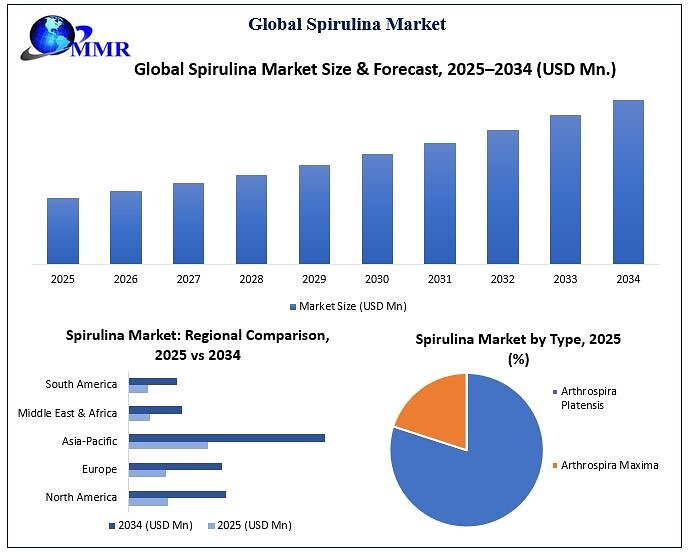
The global spirulina market was valued at USD 651.35 million in 2025 and is projected to expand at a compound annual growth rate (CAGR) of 10.6% from 2026 to 2034, reaching an estimated USD 1.61 billion. This growth is fueled by several factors, including rising consumer focus on plant-based nutrition, natural food colorants, and functional foods.
Spirulina, a nutrient-rich cyanobacteria and blue-green algae, is widely used as a dietary supplement, functional food ingredient, plant-based protein source, and natural food colorant. Its high protein content, amino acids, minerals, and antioxidants contribute to its appeal as a concentrated nutritional ingredient. The increasing demand for natural blue food colorants and phycocyanin is creating significant commercial opportunities across the beverage, confectionery, and clean-label food product sectors.
Advancements in cultivation technologies, such as photobioreactors and automated monitoring systems, are enhancing production efficiency and quality control. These technological improvements, coupled with growing applications in aquaculture and animal nutrition, and a rising preference for organic and traceable algae ingredients, are driving industry innovation and product diversification.
North America currently leads the global spirulina market, driven by demand for dietary supplements and functional foods. The Asia-Pacific region is anticipated to be a high-growth market, supported by expanding spirulina cultivation and a developing food processing industry. The market is forecast to reach USD 1.61 billion by 2034, with a CAGR of 10.6%.