Google rolling out motion sickness feature for Android phones
Google is releasing Motion Assist for Android phones, a feature designed to alleviate motion sickness by displaying moving dots on the screen. The functionality is now appearing on Pixel devices.
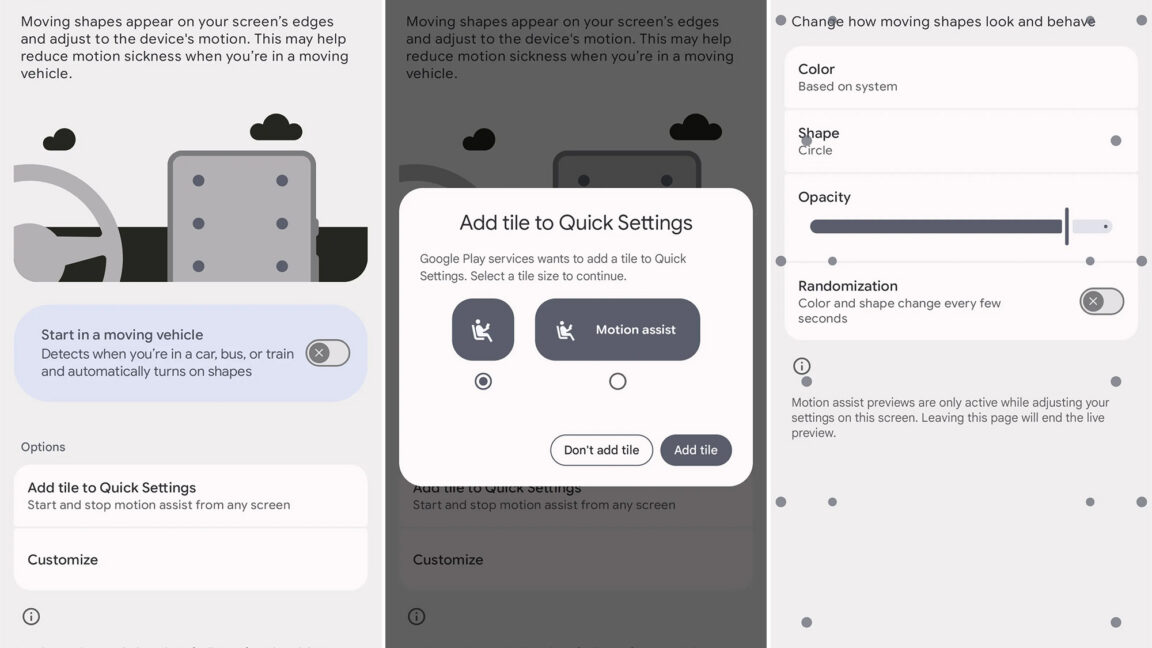
Google has begun rolling out Motion Assist, a new feature for Android phones aimed at reducing motion sickness. The system works by displaying a network of moving dots on the screen, intended to mitigate the sensory mismatch between visual input and inner ear signals that causes nausea.
This issue can significantly hinder the use of smartphones or tablets while traveling in a moving vehicle. Google's Motion Assist is similar in concept to Apple's Motion Cues feature, introduced on iPhones in 2024. The Android version is now gradually appearing on Pixel phones running Android 17.
Motion Assist was initially tested internally starting in 2024 but has not previously been available for wider testing. The feature is being delivered via Google Play Services as part of a staged rollout, meaning it cannot be manually installed through an app update.
The implementation addresses a common user problem, enhancing the usability of devices during travel. By incorporating this feature, Google aims to improve the experience for users prone to motion sickness, demonstrating a commitment to user-centric design.