Green Science Alliance Develops Aqueous Aluminum Ion Battery
Green Science Alliance has developed a stable, rechargeable aluminum ion battery using an aqueous electrolyte and a conductive carbon rubber sheet as the cathode current collector.
KAWANISHI, Japan – Green Science Alliance has announced the development of a stable, rechargeable aluminum ion battery (AAIB) that utilizes an aqueous electrolyte and a conductive carbon rubber sheet as the cathode current collector. This advancement aims to address the safety concerns, limited capacity, and raw material scarcity associated with conventional lithium-ion batteries (LIBs).
While LIBs have dominated energy storage for two decades due to their high energy density, they pose safety risks due to flammability and rely on expensive, finite resources like lithium and cobalt. Aluminum ion batteries offer a promising alternative, leveraging the abundance, low cost, and inherent safety of aluminum. However, previous aqueous-based aluminum ion battery designs have struggled with insufficient performance and stability.
The key innovation by Green Science Alliance involves the use of an inexpensive, commercially available conductive carbon rubber sheet as the cathode current collector. This material replaces the need for costly, corrosion-resistant metals previously required with more aggressive, moisture-sensitive electrolytes. The newly developed AAIB demonstrated an initial capacity of 210 mAhg⁻¹ at room temperature, which remained stable for at least 25 cycles.
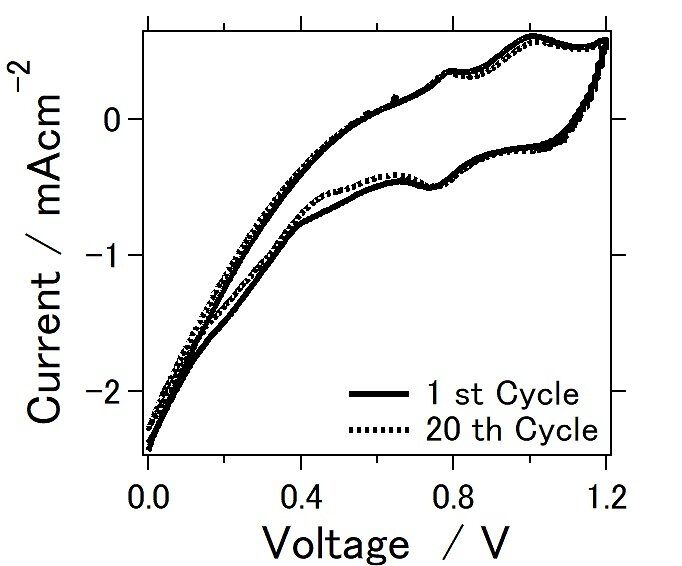
Further testing using cyclic voltammetry confirmed that charge-discharge processes occurred safely below the theoretical water splitting voltage of 1.23 V. The use of the carbon rubber sheet not only enhances stability but also significantly reduces manufacturing costs by eliminating the need for specialized inert atmosphere assembly and expensive corrosion-resistant materials, paving the way for safer and more economical energy storage solutions.