Guerbet Researches Immunotherapy and Interventional Radiology Combination for Liver Cancer
Pharmaceutical company Guerbet is investigating a novel treatment approach for liver cancer. By combining immunotherapy with interventional radiology, the aim is to enhance treatment efficacy and patient outcomes for hepatocellular carcinoma (HCC).
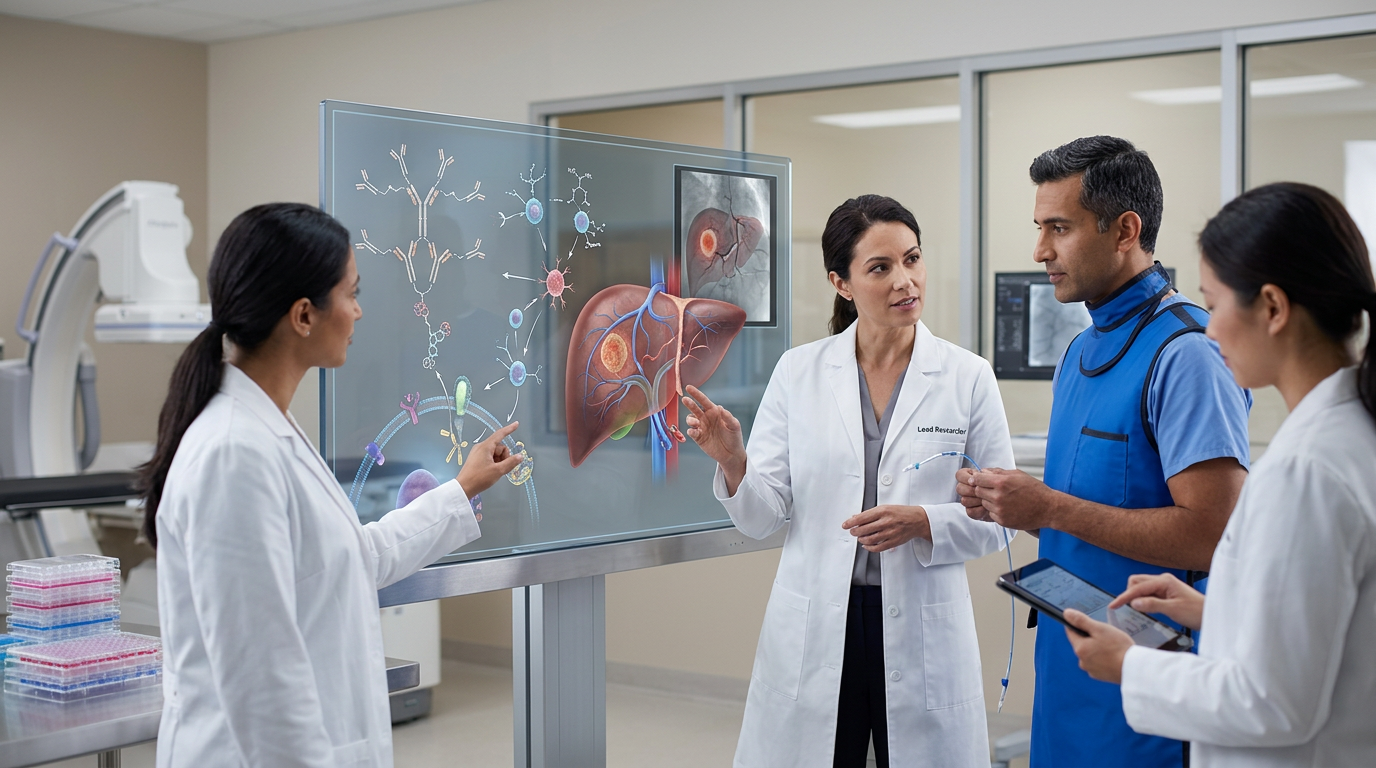
Guerbet researchers are exploring a new therapeutic strategy for treating hepatocellular carcinoma (HCC), the most common form of primary liver cancer and a significant global health concern. The current research focuses on combining immunotherapy with interventional radiology techniques, aiming to improve treatment response and tolerance for patients with unresectable tumors.
While existing treatments for HCC, such as surgery, chemotherapy, interventional radiology, and immunotherapy, offer options for various stages of the disease, their effectiveness can be limited, particularly in advanced cases. Guerbet's work addresses this by investigating the potential synergy between interventional radiology methods, like transarterial chemoembolization (TACE), and immune checkpoint inhibitors.
A Phase III clinical trial, EMERALD-1, is currently underway to assess TACE in combination with Durvalumab (an immunotherapy) and potentially Bevacizumab (an anti-angiogenic drug). Previous studies have indicated that such combinations are safe for HCC patients, and the current research aims to demonstrate superior efficacy compared to existing treatments.
This research represents a long-term commitment, with potential findings taking several years to materialize. The investigation into combining locoregional treatments with immunotherapy could lead to the development of new, more effective management strategies for patients diagnosed with hepatocellular carcinoma.