Guide to Selecting Silicone Rubber Heaters for Industrial Applications
Selecting a silicone rubber heater for industrial use requires careful consideration of heating needs, ramp-up times, and environmental conditions. Jinwei Electric Heating provides a guide for optimal choices.
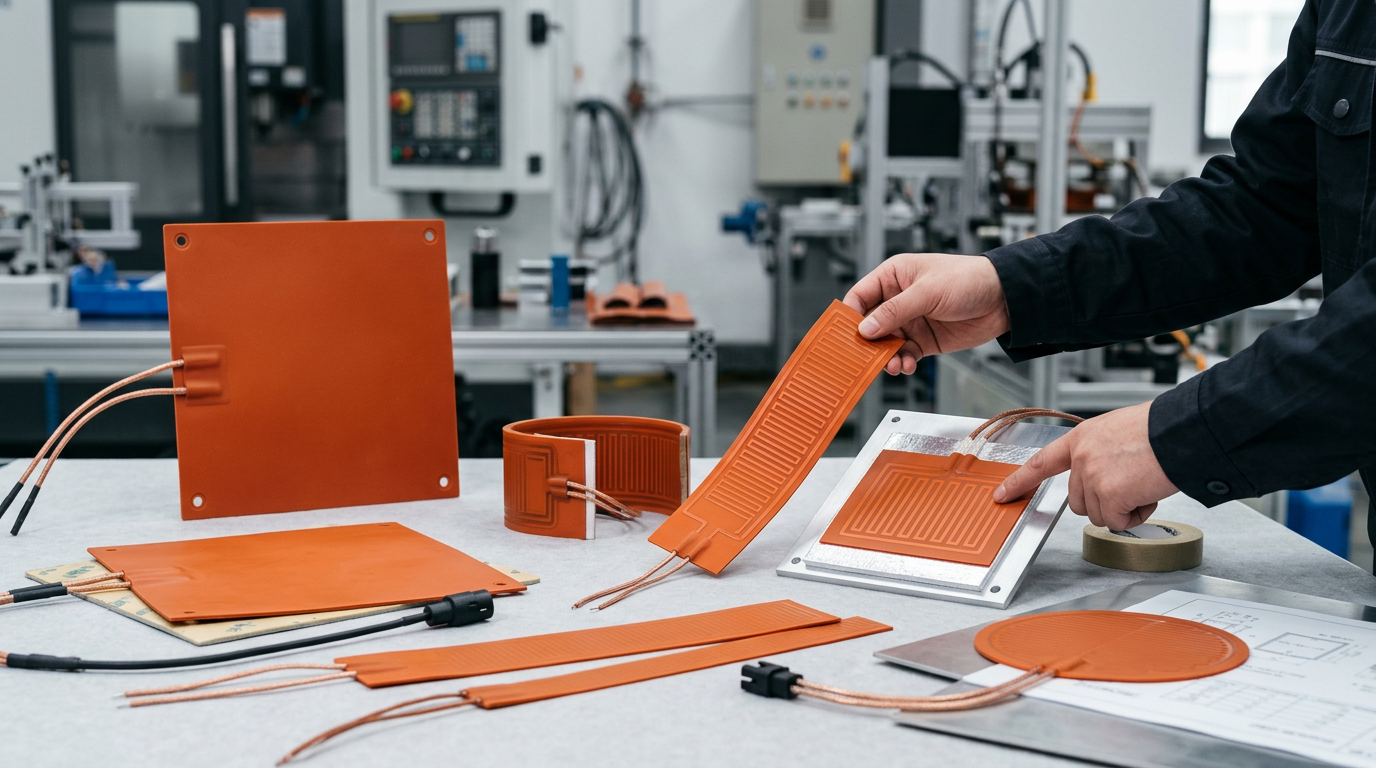
Shengzhou Jinwei Electric Heating Appliance Co., Ltd. has released guidance on selecting appropriate silicone rubber heaters for industrial applications, emphasizing that the choice goes beyond matching wattage to a surface.
The company advises that proper selection necessitates clearly defining the heating problem. This includes specifying the material to be heated, the required heat-up time, and environmental factors such as insulation, moisture, vibration, and available space. Factors like heat loss, temperature uniformity, and mounting needs are crucial for effective performance across different applications, from small enclosures to large drums or pipelines.
Key operating conditions must be identified, including exposure to chemicals, moisture, and ambient temperatures. Standard silicone heaters operate up to 232°C (450°F), but harsher environments might require specialized construction. Mechanical stress, such as continuous flexing, necessitates defining a minimum bend radius to prevent internal element fatigue.
When comparing heater specifications, critical elements include watt density, voltage, and physical dimensions. Jinwei recommends keeping watt density below 5 W/in² for general applications, allowing up to 30 W/in² for tightly controlled systems with excellent thermal transfer. Voltage options range from 12V or 24V DC for portable equipment to 120V, 240V, or 480V AC for heavy industrial use. The company highlights two primary internal element types: wire-wound, suited for high flex, and etched foil, which offers rapid and uniform heating.
The guide also stresses the importance of attachment methods, lead insulation, and control systems. While pressure-sensitive adhesives are convenient, higher temperatures require alternative solutions like RTV silicone or mechanical fasteners. Selecting heaters with appropriate strain relief for electrical leads and integrated thermal controls, such as thermostats or PT100 sensors, is vital. Finally, the company advises evaluating suppliers based on quality control, testing, and relevant certifications (e.g., UL, CE).