Helen Keller Services Names 2026 AccessAbility Award Recipients
Helen Keller Services (HKS) has announced the five recipients of its 2026 AccessAbility Awards. The awards honor organizations advancing accessibility for people who are blind, have low vision, or are DeafBlind, and for the broader disability community.
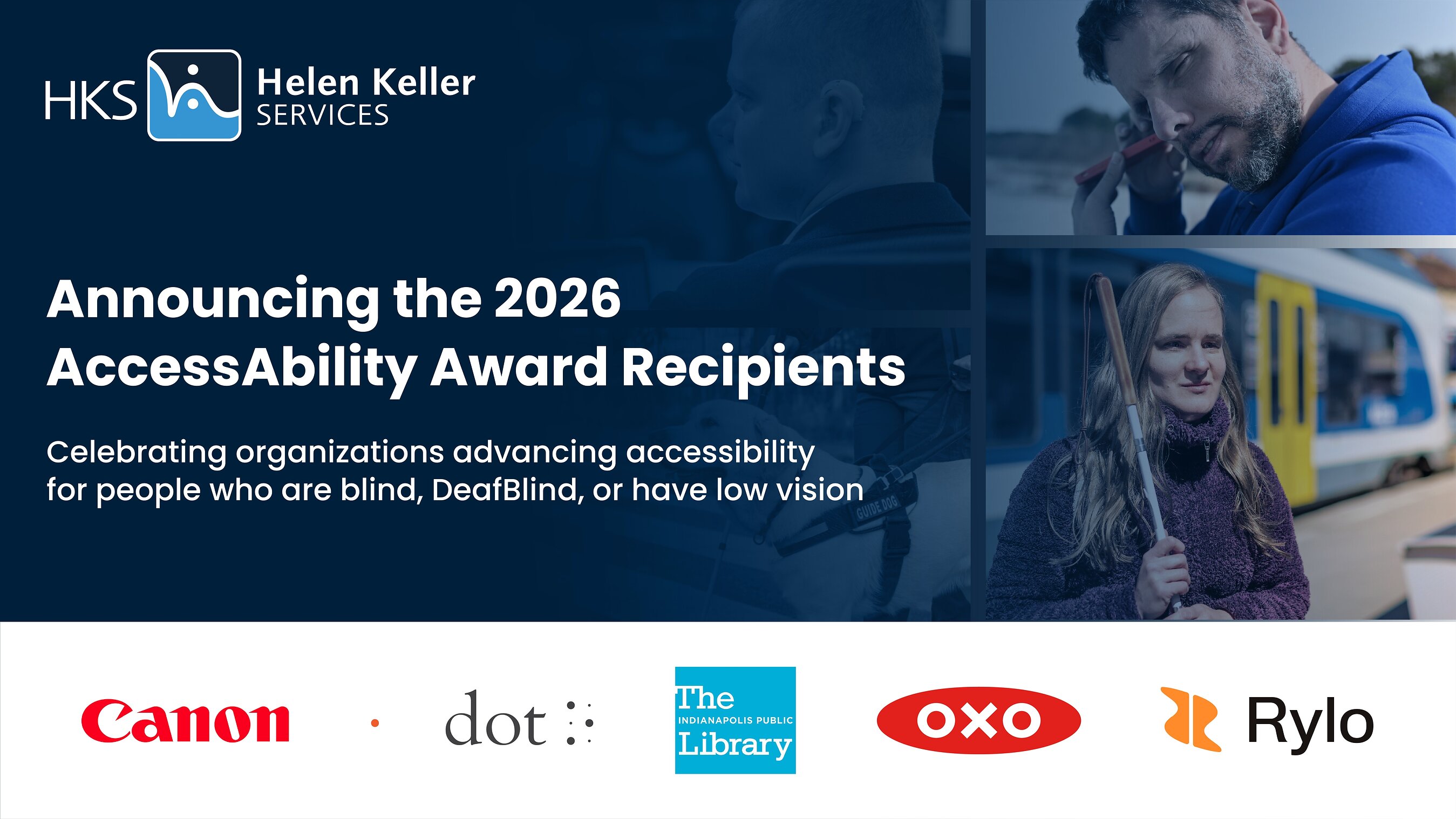
Helen Keller Services (HKS) has named the five recipients of its 2026 AccessAbility Awards, recognizing organizations for their commitment to advancing accessibility for individuals who are blind, have low vision, or are DeafBlind, as well as the broader disability community.
The 2026 honorees include Canon U.S.A., Inc., for printing technology that transforms visual imagery into tactile experiences; Dot Inc., for its Dot Pad X, a multiline braille and tactile graphics display; The Indianapolis Public Library's Michigan Road Branch, for its inclusive workplace practices; OXO, for its decades of work in universal design; and Rylo (formerly Nagish), for real-time communication technology developed with input from Deaf, DeafBlind, and hard-of-hearing communities.
Now in their sixth year, the awards will be presented on October 9 at the Helen Keller National Center in Sands Point, New York. Dr. Susan Ruzenski, CEO of Helen Keller Services, stated that accessibility is a core decision about belonging, and this year's recipients have embedded this commitment throughout their operations, leading to better products, stronger workplaces, and communities that allow for full participation.
The selection committee emphasized organizations where accessibility is integrated into daily practices, not just mission statements. A key criterion was direct engagement with the disability community and using feedback to shape development and service delivery. These award recipients serve as examples for other organizations seeking to improve accessibility through ongoing dialogue with people with disabilities.