High Nickel and Vanadium Content in Petroleum Coke Requires Special Attention
Elevated levels of nickel and vanadium in petroleum coke present challenges to the calcination process and final product quality, necessitating enhanced preparation and control measures.
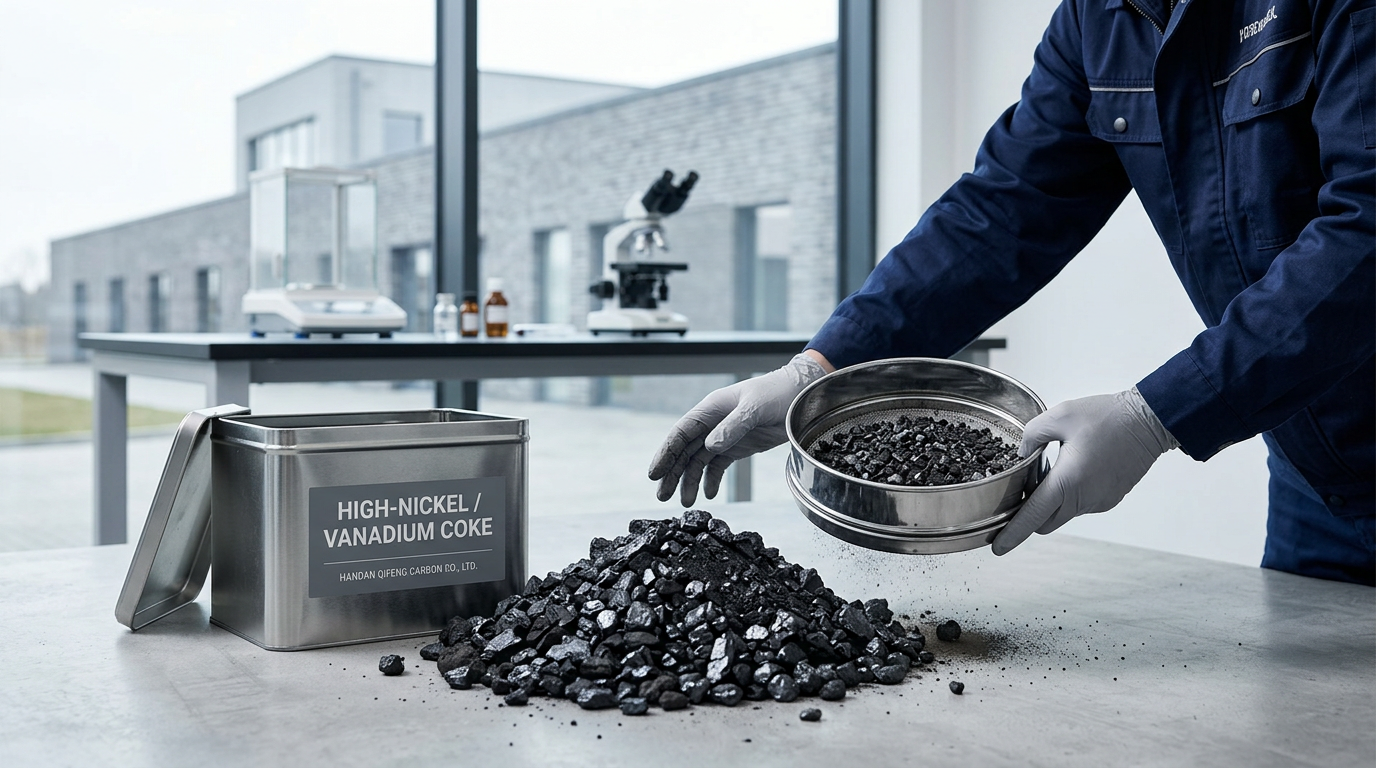
Handan Qifeng Carbon Co., Ltd. has highlighted the difficulties associated with calcining petroleum coke that contains high concentrations of nickel and vanadium. These elements can significantly compromise the stability of the calcination process and negatively impact product quality, requiring specific handling procedures.
At high temperatures, above approximately 900°C, vanadium forms low-melting-point oxides, such as V₂O₃. These oxides exhibit high corrosivity, rapidly eroding the refractory lining of calcination furnaces and reducing equipment lifespan. Additionally, they increase slag viscosity, leading to blockages at discharge ports and disrupting the furnace's material balance. Nickel can also form gaseous compounds, like Ni(g) and NiS(g) above 1400°C, contributing to furnace body erosion.
Process control is further complicated by the complex morphological transformations of nickel at varying temperature ranges. Nickel's state changes during calcination, posing significant challenges to precise temperature management. Vanadium can also catalyze the conversion of sulfur dioxide to sulfur trioxide in a gasification environment, exacerbating flue gas pollution and equipment corrosion.
The presence of high volatile matter, typically ranging from 8% to 15%, can lead to coking within the furnace during calcination. This increases operational difficulties and accelerates the abnormal migration and volatilization of nickel and vanadium due to localized overheating, creating a detrimental cycle.
Consequently, Handan Qifeng Carbon Co., Ltd. emphasizes the critical need for stringent trace element testing of raw materials. The calcination temperature curve must be adjusted according to nickel and vanadium content, often requiring temperatures of 1450°C or higher. The use of corrosion-resistant furnace linings and enhanced slag discharge mechanisms is also essential to ensure product quality and prevent equipment failure.