High-speed video reveals how honey bee stingers pump venom
New research using high-speed video has uncovered the unique mechanism honey bees use to continue pumping venom even after the bee has detached and flown away.
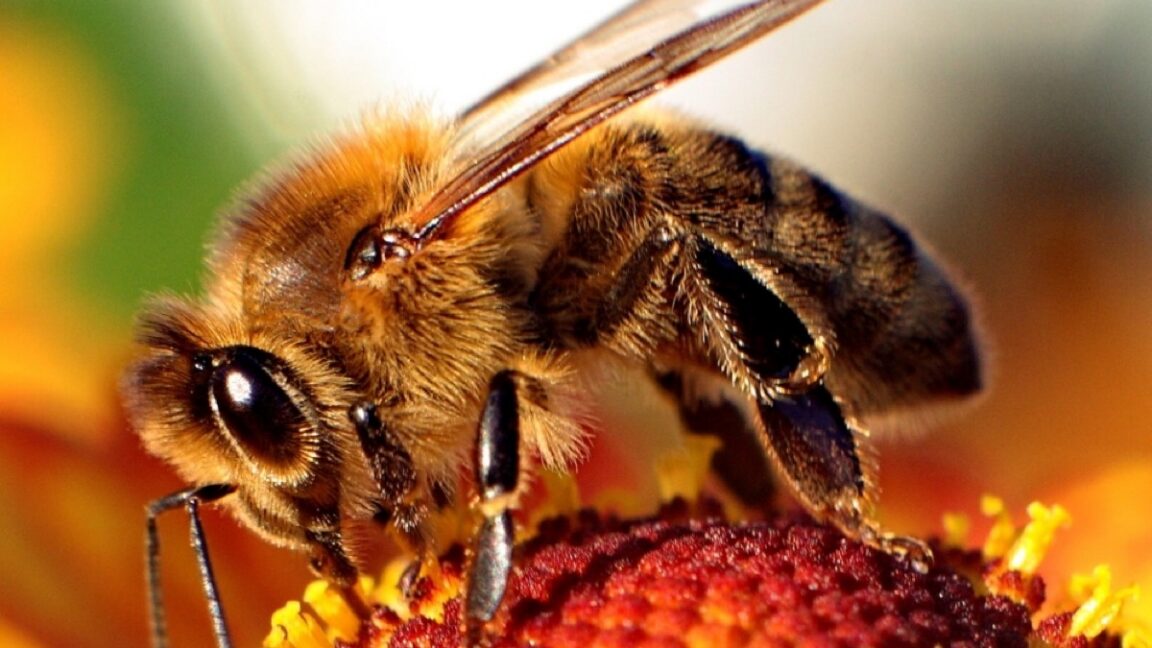
Scientists have now revealed, through the use of high-speed video, how honey bee stingers continue to pump venom into a victim even after the bee has flown away. This mechanism relies on a unique double-piston pump-like system, according to a new paper published in the Proceedings of the National Academy of Sciences.
Different species have evolved distinct methods for venom delivery. Spiders, for instance, use muscles surrounding their venom glands to eject venom through hollow fangs. Bees, wasps, and ants deliver venom via their stingers, either through muscle contractions or via stiff lancets working in tandem.
Honey bees (Apis mellifera) exhibit a unique trait: worker bees fly away after inserting their stingers, leaving the stinger embedded. The stinger itself continues to penetrate tissue and pump venom autonomously, a phenomenon known as autotomy. A honey bee's stinger comprises three interlocking parts forming the venom canal: a stylet that expands into the main pumping chamber and two sharp lancets that slide back and forth, piercing tissue and pumping venom.
This research sheds light on the complex adaptations of insects and provides new understanding of venom delivery biomechanics.