Holmen Clarifies Paperboard Creasing and Folding Techniques
Holmen Board & Paper has released guidance on the creasing and folding properties of paperboard. The company emphasizes creasing as a crucial step for achieving quality folds.
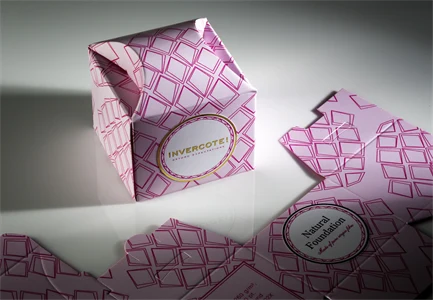
Holmen Board & Paper has issued detailed guidance on the creasing and folding characteristics of paperboard. The company highlights that, unlike standard paper, paperboard benefits significantly from being creased before folding. This process is essential for creating distinct, durable, and narrow fold lines without causing visible cracks on printed, varnished, or laminated surfaces.
The multi-ply construction of paperboard is key to achieving deep and narrow creases. The creasing operation weakens the material along well-defined lines, acting as hinges for folding. A deep and narrow crease facilitates easier folding and improves the quality of the final result. Thicker paperboard may necessitate multiple creases or scoring prior to folding.
Optimal creasing occurs when the paperboard delaminates into as many thin, unbroken layers as possible along the fold line. This ensures robust folds that maintain functionality and appearance through repeated use. Folding should consistently be performed towards the bead to prevent cracking on the opposite side.
The creasing process involves a steel rule pressing the paperboard into a groove. The depth and width of the crease are determined by the creasing tool's geometry and the paperboard's ability to conform. Holmen provides further insights and inspiration regarding the use and technical properties of its paper and paperboard products on its website.