Housing inventory growth slows nationally, Florida sees decline
Nationally, the active housing inventory is increasing but at a decelerating pace. Florida, however, is experiencing a slight year-over-year decrease in available homes.
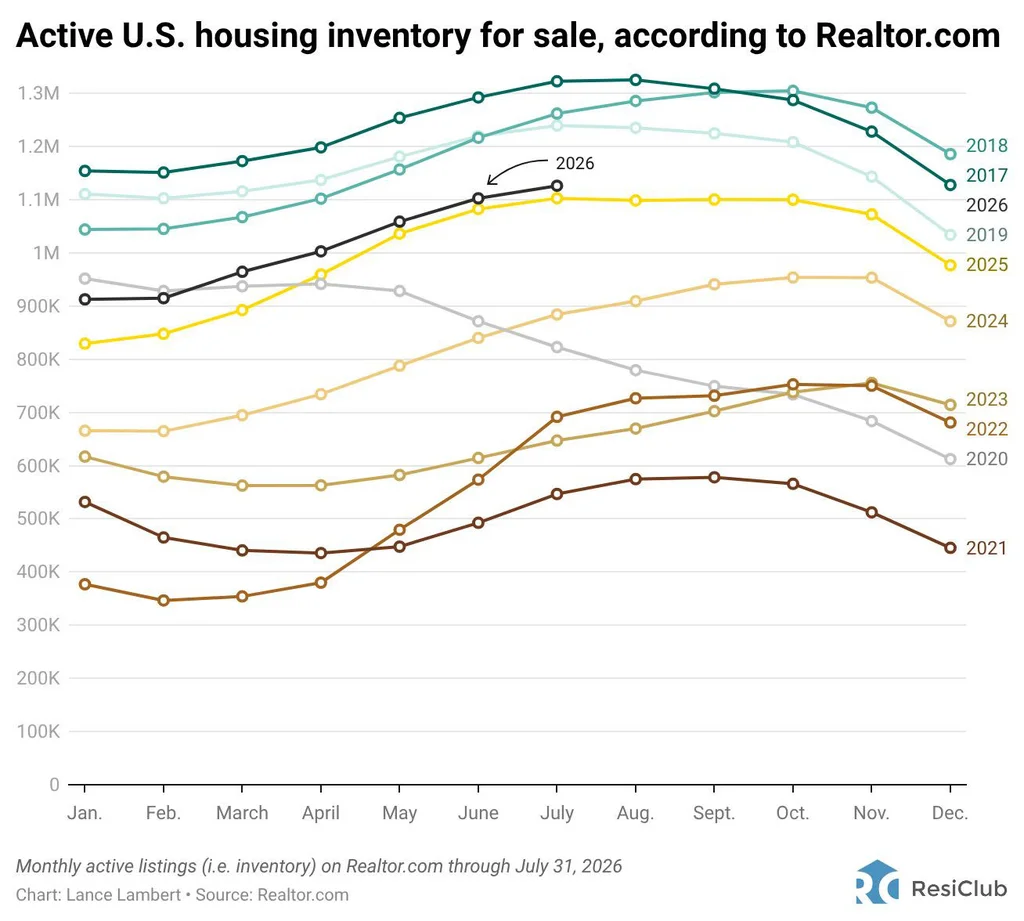
The U.S. housing market's active inventory saw a modest year-over-year increase of 2.1% as of July 2026. This growth rate has significantly decelerated from the 24.7% rise observed a year prior, indicating a stabilization in supply and demand dynamics following shifts in domestic migration and interest rates.
Despite the slight national increase, overall inventory remains 9.1% below pre-pandemic levels from July 2019. Certain regions, particularly in the Midwest and Northeast, continue to experience tight housing supplies. In these areas, sellers generally hold a stronger negotiating position compared to markets in the South.
In contrast to the national trend, Florida's active housing inventory has declined by 14% year-over-year. This marks a notable shift for a state that has seen some of the weakest regional market performance recently. Meanwhile, areas in the Sunbelt and Mountain West, including markets like Austin and Punta Gorda, Florida, have seen their inventory levels return to or surpass pre-pandemic 2019 figures.
The abundance of new construction and subsequent price adjustments in the Sunbelt have also influenced the resale market. Builders have offered incentives and discounts, drawing some buyers away from existing homes. This has contributed to increased inventory of existing homes and downward price pressure in specific locations, even as national home prices remain flat year-over-year.