HPQ Silicium reactor reduces CO2 emissions by over 50%
HPQ Silicium Inc. has announced that its new fumed silica reactor technology can reduce direct CO2 emissions by over 50% compared to conventional methods. The process eliminates the need for silicon metal feedstock.
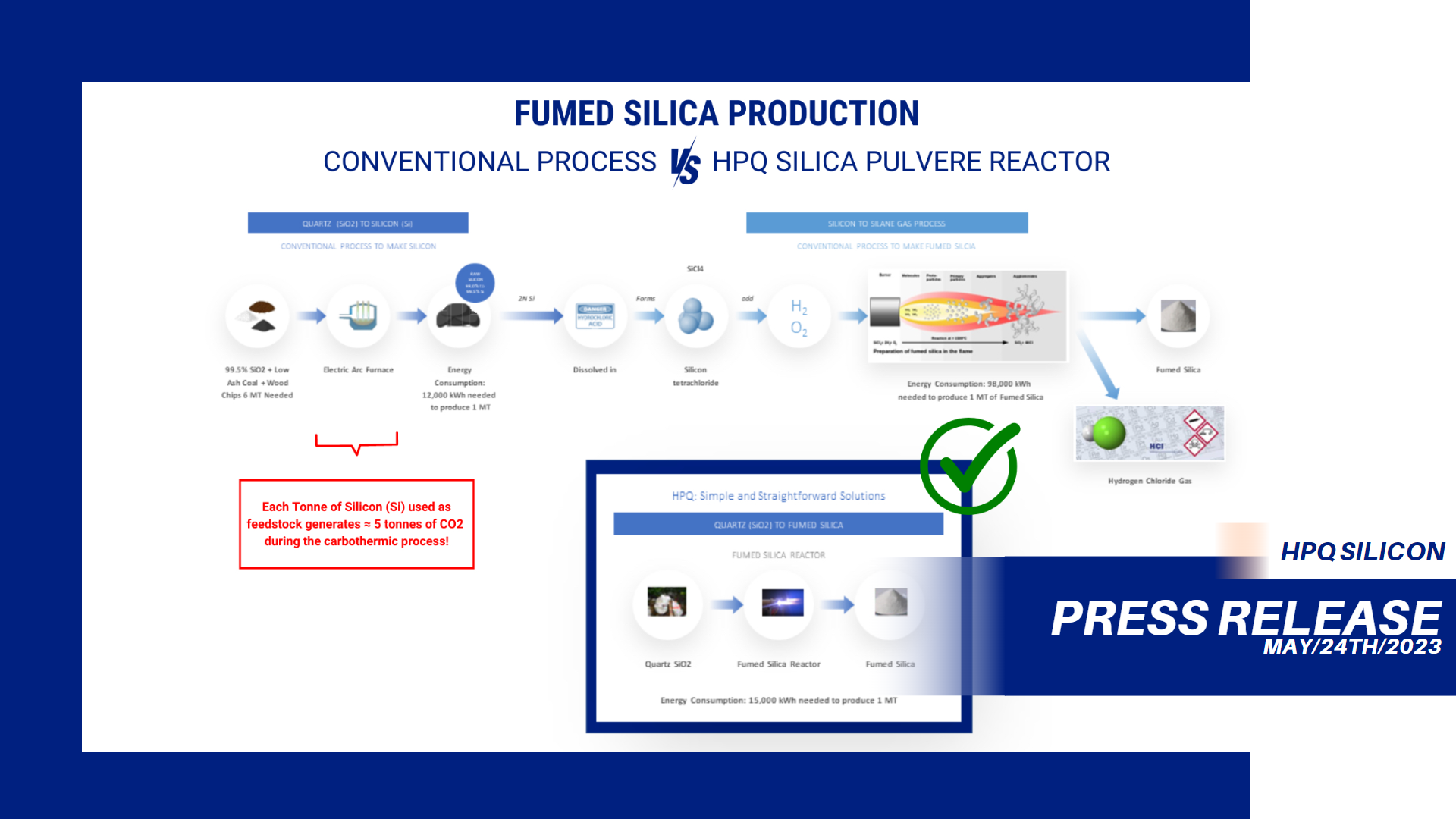
HPQ Silicium Inc. reported significant environmental benefits from its developing fumed silica reactor technology. The reactor, created by wholly-owned subsidiary HPQ Silica Polvere in partnership with PyroGenesis Canada Inc., is projected to cut direct CO2 equivalent (CO2e) emissions in fumed silica production by over 50% from industry standards.
Conventional fumed silica manufacturing relies on silicon metal as a feedstock, a process involving high energy consumption and generating hydrogen chloride gas as a byproduct. This traditional method results in a carbon footprint of approximately 9.5 tonnes CO2e per tonne of fumed silica, with over 60% attributed to the silicon metal production step.
The new HPQ Polvere reactor enables a direct transformation of quartz into fumed silica, bypassing the energy-intensive carbothermic process required to produce silicon metal. This innovation could potentially reduce direct CO2e emissions by over 60%, equivalent to approximately 5 tonnes CO2e per tonne of fumed silica produced.
Bernard Tourillon, President and CEO of HPQ Silicon, stated that the process also reduces energy requirements by at least 86%. HPQ believes its technology can produce commercial-grade fumed silica with a substantially lower carbon footprint. For instance, adoption in Canada could cut annual emissions by 120,000 tonnes, in the United States by 145,000 tonnes, and in Europe by 460,000 tonnes, depending on market volumes.