Huawei Proposes AI-Native Core Network for Future Agent Services
Huawei has outlined a vision for an AI-native core network architecture designed to support future AI agent-based services. This architecture aims to handle billions of AI agents and facilitate complex task execution.
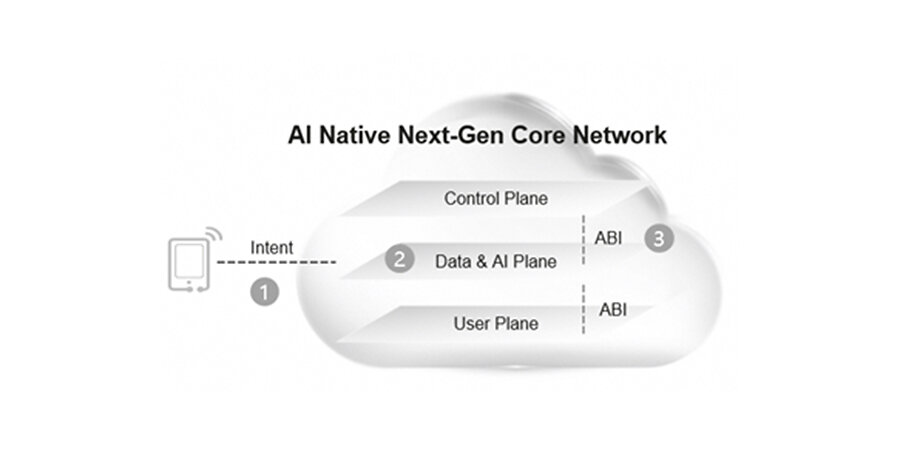
Huawei has detailed its concept for an AI-native core network architecture, engineered to support the burgeoning landscape of AI agent-based services. The proposed network is intended to move beyond traditional connectivity, enabling the core network to understand AI agent intentions and facilitate task completion.
The company projects that by 2035, the global number of AI agents could reach 900 billion, necessitating a significant evolution in network capabilities. To address this, Huawei suggests three key scenarios: Agent on New Radio (AoNR) for guaranteeing task response times, Wide Computing Network (WCN) for enhancing computational resource efficiency, and Agent Collaboration Network (ACN) for securing agent cooperation.
Essential features of the next-generation core network include intent-based interfaces, allowing devices to directly communicate task-specific requirements to the network. A new Data and AI Plane (DAP) is also proposed to act as an intelligence layer, dynamically optimizing resources. AI-driven processes are to be deeply embedded within the network's core procedures for seamless coordination.
Huawei envisions a two-stage evolution, from AI-enhanced networks to fully AI-native ones. This advanced stage would enable "extended connectivity," where the network ensures service execution, and "beyond connectivity," offering computing services and facilitating agent collaboration. Achieving this transformation requires broad ecosystem-wide cooperation within the ICT sector.