Huawei Proposes AI-Native Core Network for Future Agent Services
Huawei has outlined a vision for an AI-native core network architecture to support the growing number of AI agents and enable advanced services. The proposed design integrates AI deeply into network functions and interfaces.
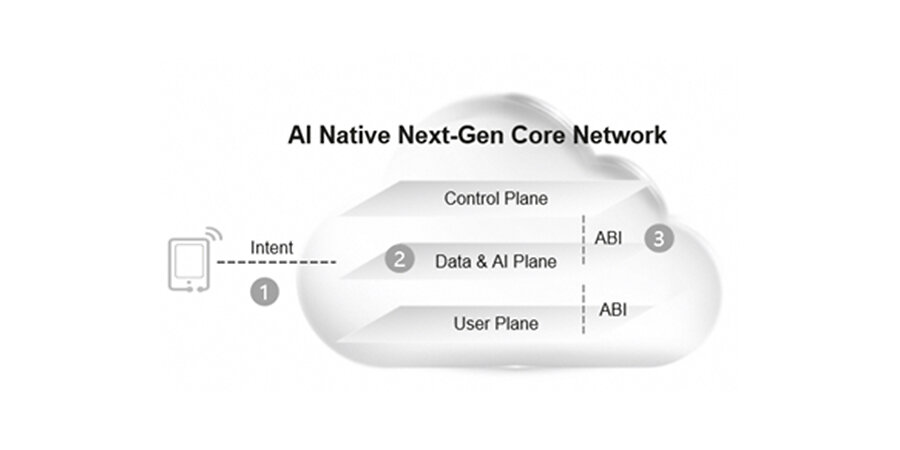
BEIJING, October 15, 2026 – Huawei is proposing a shift towards an AI-native core network architecture to manage the increasing demands of agent-based services. The company argues that traditional mobile networks are insufficient for supporting the vast number of artificial intelligence agents anticipated in the coming years.
Huawei's vision centers on integrating artificial intelligence directly into the network's interfaces, functions, and procedures. This approach aims to enable network operators to move beyond basic connectivity and offer intelligent network capabilities. The company projects that the global count of AI agents could reach 900 billion by 2035, necessitating a more sophisticated network infrastructure.
The proposed architecture addresses key challenges through three distinct scenarios: Agent Over New Radio (AoNR) for task latency assurance, Wide-Area Computing Network (WCN) for enhanced computational efficiency, and Agent Computing Network (ACN) for facilitating agent collaboration. These components are designed to support complex, task-oriented AI services that will become prevalent.
According to Huawei, the next-generation core network architecture should possess three core characteristics: intent-based interfaces that communicate specific task requirements to the network, the introduction of a Data and AI Plane (DAP) alongside traditional planes to manage AI-driven operations, and AI deeply embedded within network procedures for seamless coordination. This will allow the network to understand intent, make intelligent decisions, and ensure task completion.
The company envisions a two-phase development. The initial phase focuses on AI-enhanced customer experiences, while the subsequent phase will see the network providing services beyond connectivity, such as computational services and agent coordination. Huawei stresses that this transition requires extensive collaboration across the entire ICT ecosystem, including terminals, chips, and networks.