Industrial Filtration Systems Integrate AI and Sustainability Demands
The industrial filtration market is undergoing a significant shift as systems move from passive maintenance to intelligent, data-driven solutions influenced by AI and environmental regulations.
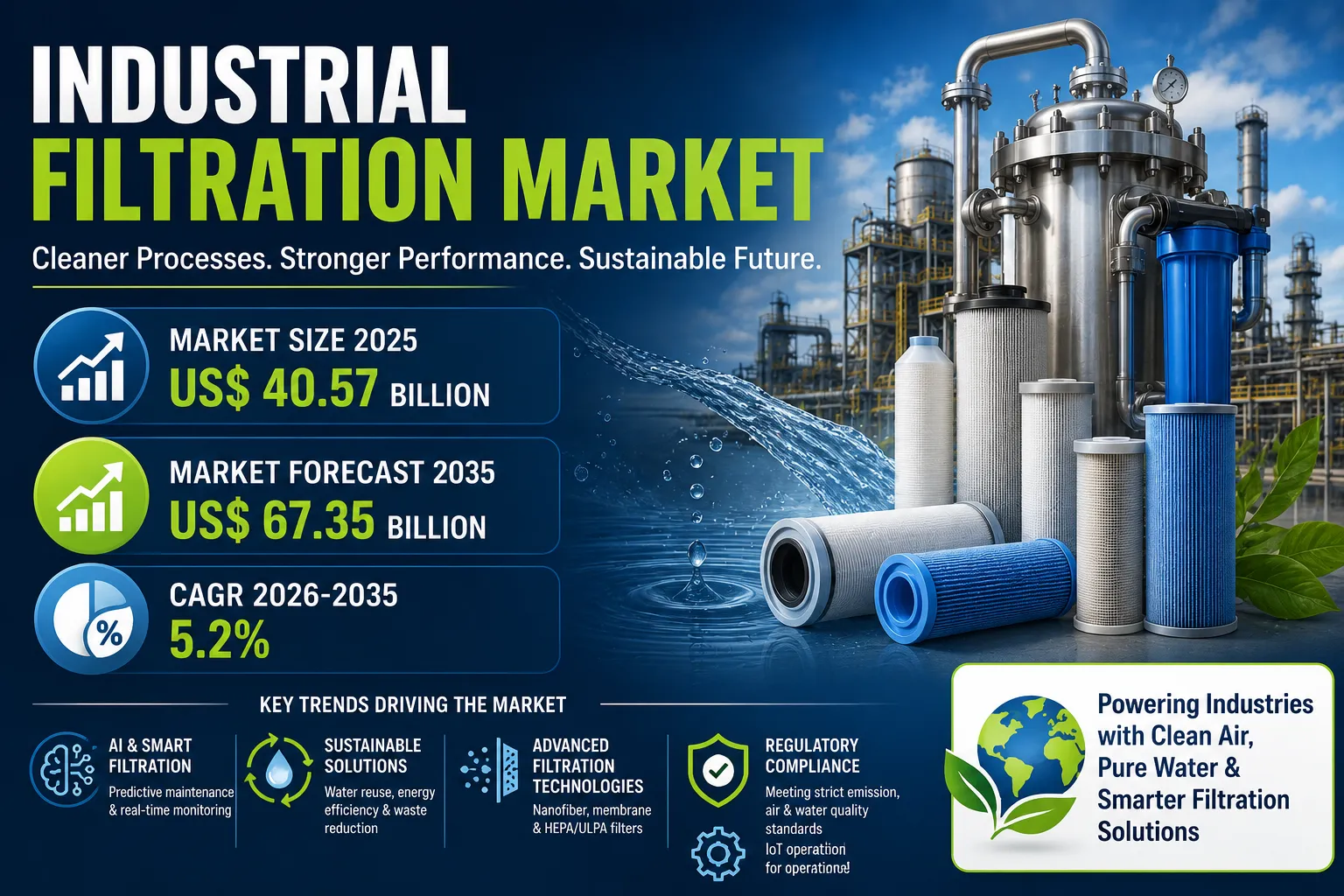
The industrial filtration sector saw a significant transformation in 2026 as manufacturers increasingly integrated artificial intelligence (AI), smart filters, and sustainable practices into their operations. This evolution elevates filtration from a routine task to a strategic component of manufacturing processes, aimed at improving efficiency and meeting stricter environmental mandates.
DataM Intelligence reports that the global industrial filtration market was valued at $40.57 billion in 2025 and is projected to grow at a compound annual growth rate of 5.2% through 2035. The focus has expanded beyond simple particle removal to encompass plant uptime, worker safety, product quality, and energy efficiency.
Key technological advancements include AI-powered filtration systems that enable real-time performance monitoring and predictive maintenance. This approach helps to minimize unexpected downtime and optimize filter lifecycles by ensuring filters are replaced based on actual condition rather than fixed schedules.
Furthermore, the removal of hazardous substances like PFAS has become a critical concern due to tightening environmental regulations, driving demand for specialized filtration technologies. The adoption of sustainable filter media, nanofiber filters, and membrane filtration is also on the rise, contributing to water reuse initiatives and a reduced manufacturing environmental footprint.