Info-Tech: CIOs Must Modernize Compliance Processes Amid Rising Regulatory Complexity
Organizations are struggling with manual, fragmented approaches to increasingly complex regulations, according to Info-Tech Research Group. The firm recommends structured, scalable strategies for IT leaders to improve compliance execution.
Chief Information Officers are facing mounting pressure to overhaul how their organizations interpret and manage compliance requirements due to a surge in the volume and complexity of regulations. Many businesses still rely on fragmented, manual processes that lead to delays and increased risk, states Info-Tech Research Group.
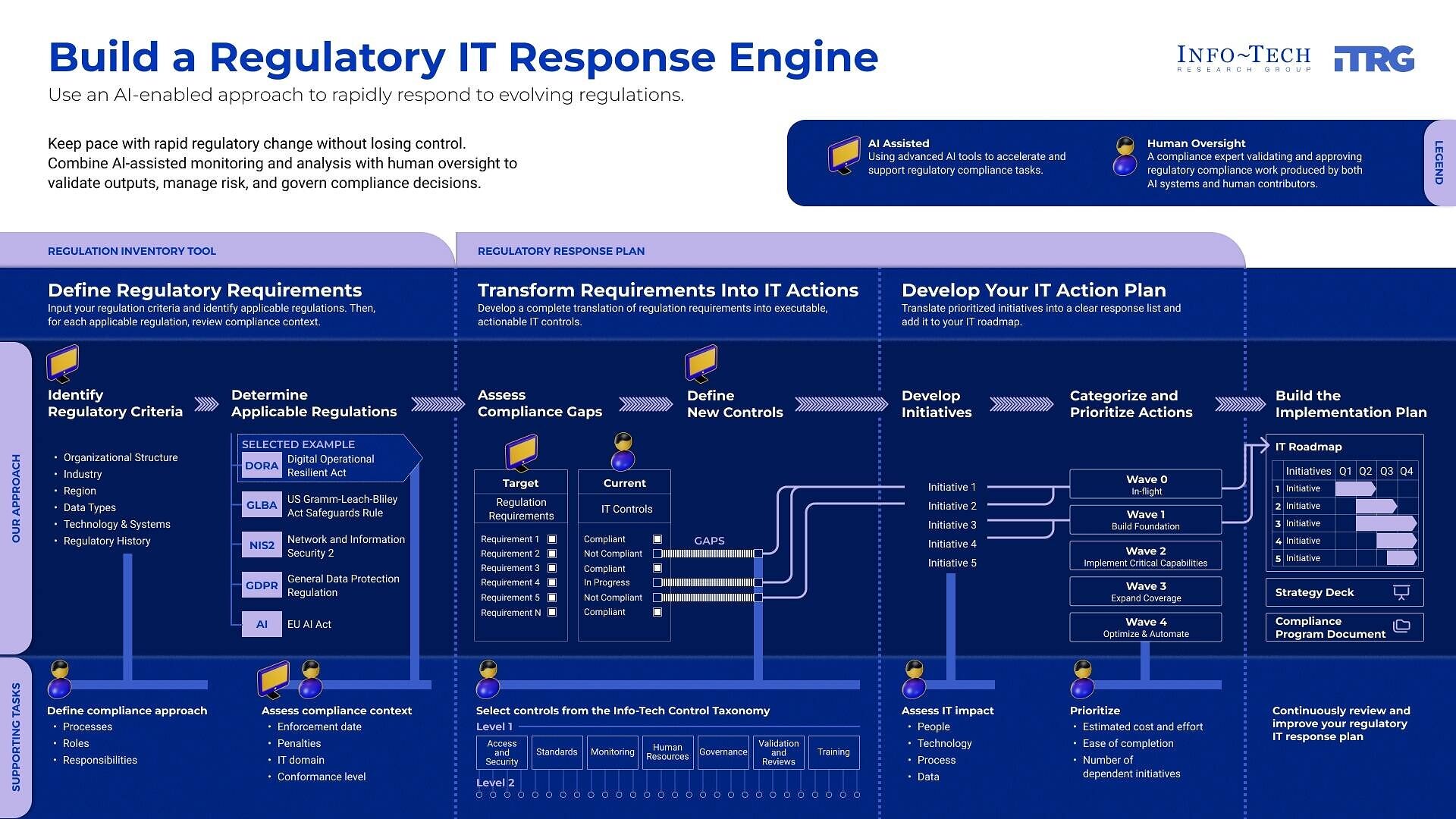
Info-Tech's new blueprint, "Build a Regulatory IT Response Engine," addresses these challenges by providing a framework to help IT leaders operationalize compliance. The research group found that organizations often face barriers such as inconsistent interpretation of requirements, poor prioritization of IT initiatives, and limited scalability, which hinders effective response.
The blueprint suggests a coordinated and repeatable approach, incorporating AI-enabled tools for faster analysis and planning. However, it emphasizes that these technological aids are only effective when coupled with strong governance and human oversight to ensure proper execution. This structured method aims to translate regulatory obligations into actionable IT controls and prioritized initiatives.
"Regulatory response is becoming too complex to manage through disconnected, manual processes," said Ahmad Jowhar, a senior research analyst at Info-Tech Research Group. "IT leaders need a repeatable way to interpret requirements, prioritize action, and use AI to accelerate planning without losing the governance and oversight needed to execute effectively."
Info-Tech recommends defining the regulatory landscape, translating requirements into clear IT controls, prioritizing initiatives based on impact and timelines, and building a communication roadmap. This framework aims to shift organizations from a reactive compliance stance to a more proactive and scalable model, ensuring sustained adherence to regulations.