Inverse Square Law Crucial for Flash Photography Exposure Control
In studio photography, the distance between the light source and the subject is as critical as flash power. The inverse square law explains how this distance impacts light intensity and exposure.
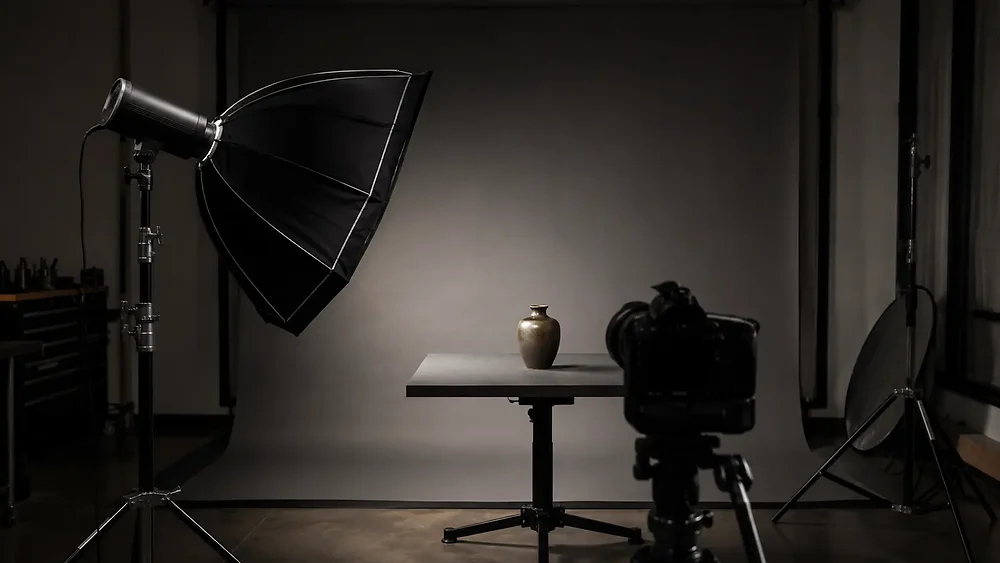
When learning to use studio flashes, photographers often prioritize power settings like watt-seconds, ISO, and aperture. However, Flaşçı, a provider of photographic equipment, emphasizes that the distance from the light source to the subject is equally, if not more, decisive. This distance dictates not only the direction of the light but also how much light reaches the subject, how the background is illuminated, and the exposure difference between foreground and background.
The inverse square law governs this relationship: as the distance from a light source increases, the intensity of the light decreases proportionally to the square of the distance. Put simply, doubling the distance from the light source reduces the light intensity reaching the subject to one-fourth. This translates to a loss of approximately two exposure stops for every doubling of distance.
This principle is particularly relevant in product and portrait photography, where light sources are often placed close to the subject. Minor adjustments in distance at close range can cause significant changes in exposure, explaining why one side of a small object might appear overexposed while the other remains dark. While the law holds true at greater distances, its effects become more pronounced and easier to manage in larger setups.
Flaşçı highlights that understanding the inverse square law is fundamental for photographers to interpret light in the studio. It guides not only power calculations but also the overall light distribution within the scene. Adjusting the position of the flash affects the entire lighting setup, making distance a critical factor for achieving desired photographic results.