Iran War 2026: Shockwave Across Global Industries
The US and Israel's February 2026 offensive against Iran has disrupted the Strait of Hormuz and triggered a global energy and food security crisis.
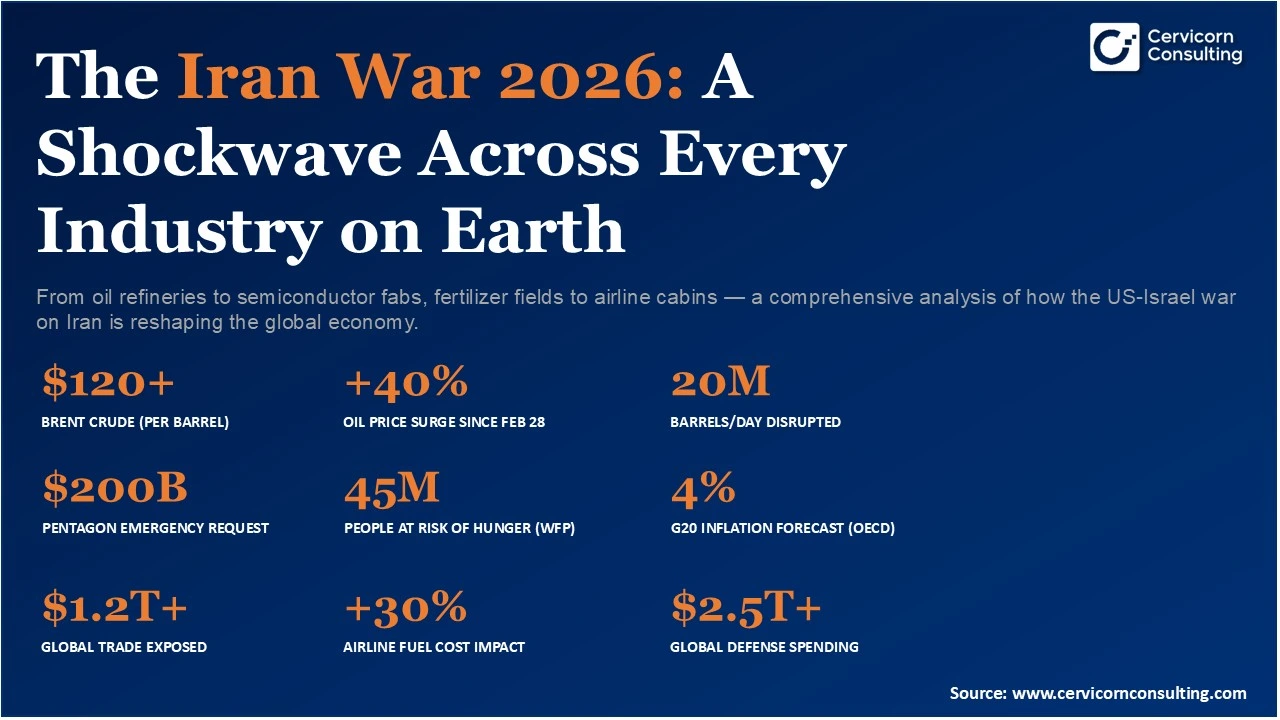
On February 28, 2026, the United States and Israel launched "Operation Epic Fury," a surprise attack targeting Iran's nuclear facilities, command centers, and military assets. Iran immediately retaliated with ballistic missiles and drones against Israel, U.S. bases in the Gulf, and energy infrastructure in Saudi Arabia, UAE, Bahrain, Kuwait, and Qatar.
The ensuing conflict, now 27 days old, has rapidly escalated from a regional dispute into what the International Energy Agency (IEA) terms "the greatest global energy and food security challenge in history." The war poses a significant threat to transit through the Strait of Hormuz, a critical chokepoint for global oil and LNG flows, invoking comparisons to the 1970s oil embargo.
The economic repercussions extend beyond the energy sector, impacting agriculture, aviation, shipping, semiconductors, healthcare, construction, financial markets, and consumer goods. Brent crude prices have surged from $72 to over $120 per barrel, and LNG prices have risen sharply following Qatar's declaration of force majeure on gas exports. Production in the Gulf has fallen by over 10 million barrels per day.
The aviation industry faces grounded fleets and doubled fuel costs, while shipping confronts rerouting challenges and increased war-risk insurance premiums. The agricultural sector is experiencing threats to its spring planting season due to fertilizer export disruptions, driving up food prices and endangering global food security. Semiconductor, healthcare, and consumer goods sectors are also reporting supply chain issues and rising costs.