ISO Adds Class L for Lithium-ion Fires as NYC Sets Strict Energy Storage Threshold
The International Organization for Standardization (ISO) has introduced a new fire classification, Class L, for lithium-ion batteries. This coincides with New York City enforcing stringent regulations on energy storage systems.
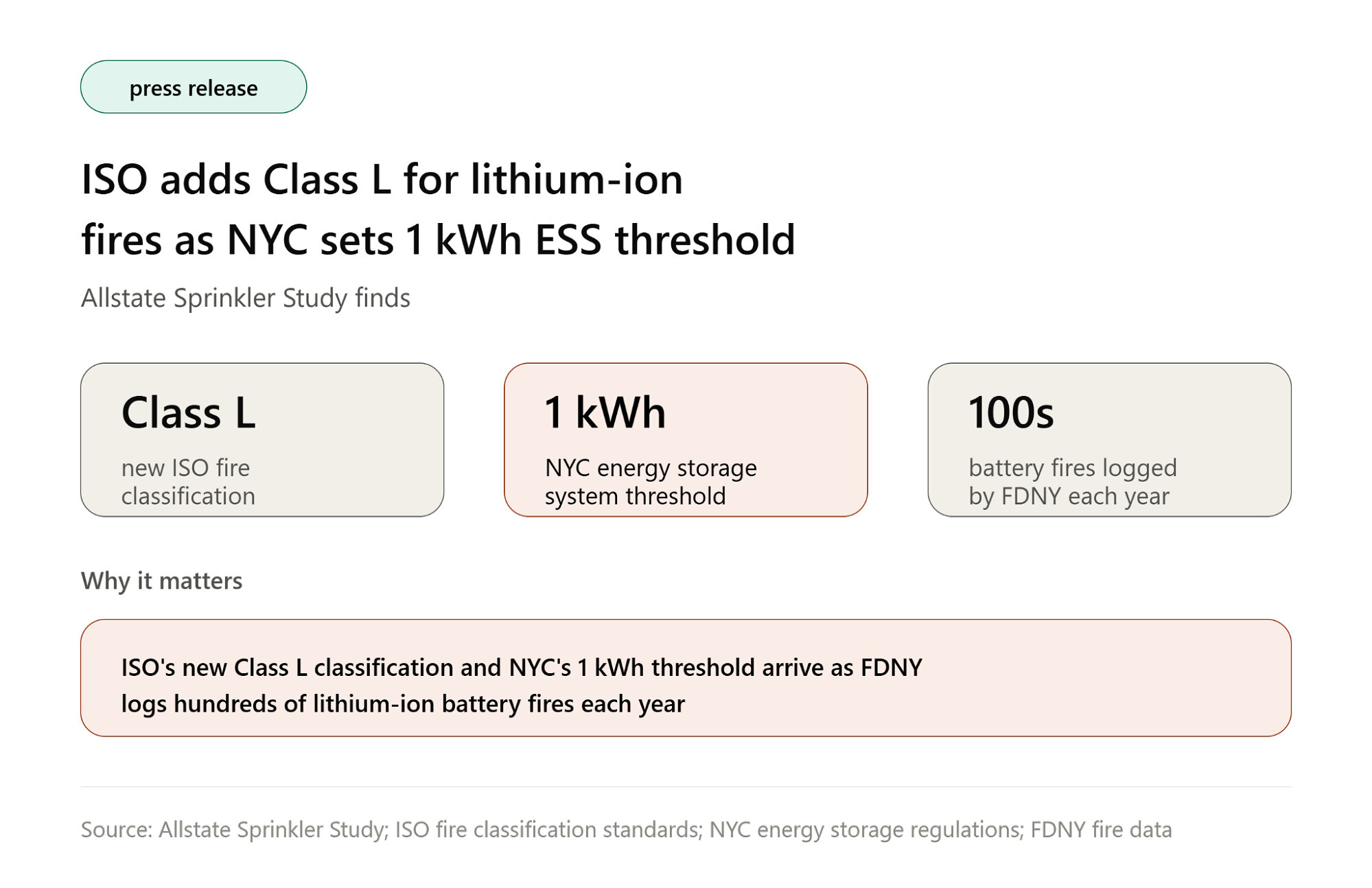
The International Organization for Standardization (ISO) has established a new fire classification, Class L, specifically for fires involving lithium-ion batteries. This global standard update aligns with New York City's already stringent regulations concerning lithium-ion energy storage systems (ESS), which feature one of the nation's lowest regulatory thresholds.
Allstate Sprinkler, a fire protection contractor based in the Bronx, analyzed the ISO's third revision of the ISO 3941 standard, effective January 2026. The new classification distinguishes lithium-ion battery fires from other types, such as combustible metal fires (Class D). The analysis connects this international change with New York City's existing building codes that mandate specialized treatment for lithium-ion batteries.
Under New York City's building codes, regulatory obligations for lithium-ion ESS are triggered at a threshold of just 1 kWh. In comparison, lead-acid battery systems have a threshold of 70 kWh under the same framework. This seventy-fold difference means that smaller lithium-ion installations require design approval, equipment listing, fire testing, and FDNY approval, requirements not automatically applied to lead-acid systems of comparable size.
Data from the New York City Fire Department (FDNY) supports the need for stricter regulations. In 2024, the department recorded 277 lithium-ion battery fires across the city, although fatalities linked to these fires dropped significantly from the previous year. Analyses suggest a substantial portion of these fires occur when batteries are not actively charging, highlighting the importance of factors such as charging conditions, storage, and battery condition.