Jim Cramer Urges Diversification Beyond AI Stocks
CNBC's Jim Cramer advised investors to diversify portfolios beyond the current AI boom. He warned against over-concentration, citing historical market bubbles and emphasizing the long-term safety of broader investment strategies.
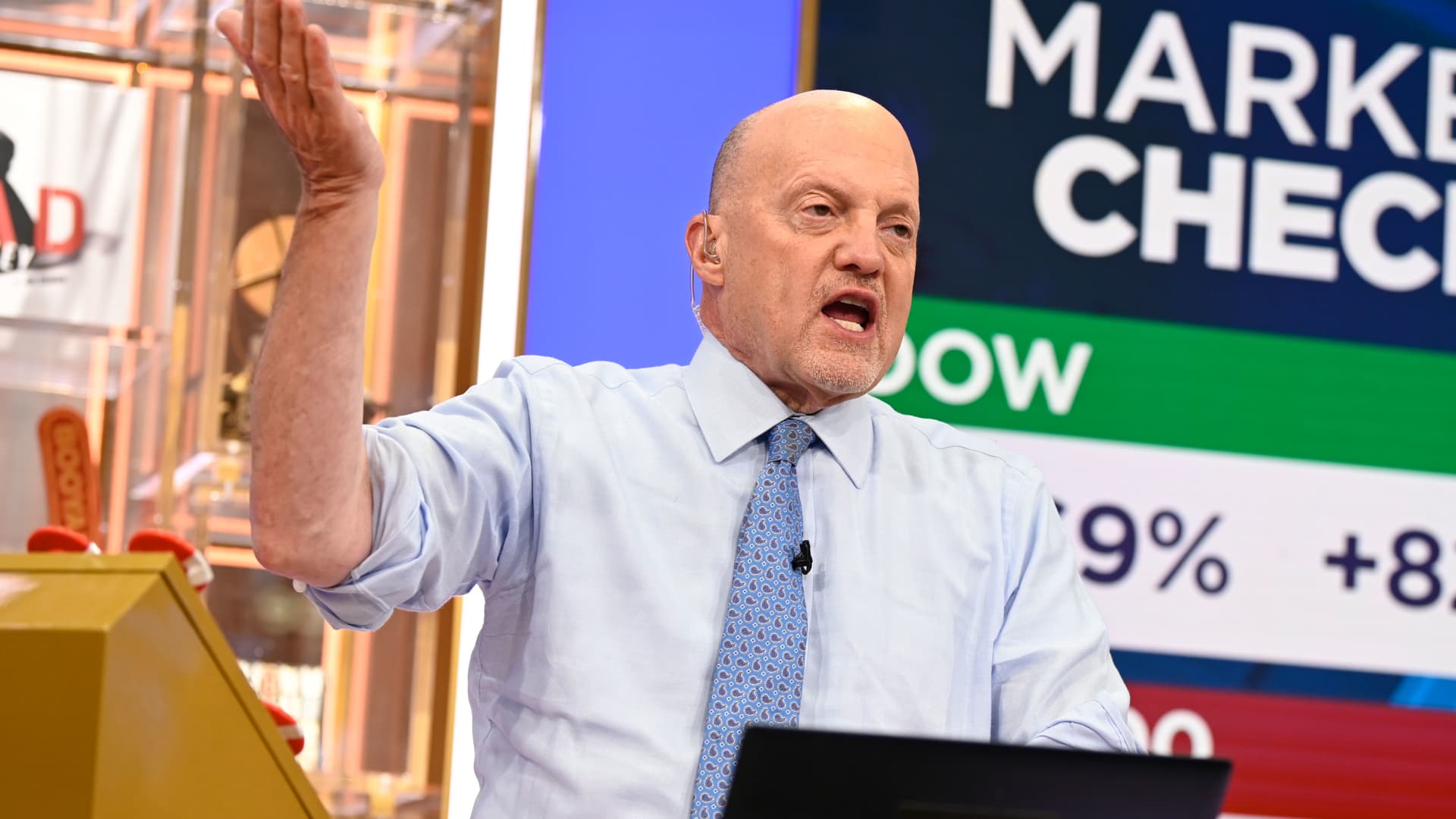
Jim Cramer, host of CNBC's "Mad Money," reiterated the importance of investment diversification, particularly amidst the rapid growth driven by artificial intelligence (AI). Cramer urged investors to look beyond the most prominent AI-related stocks and spread their investments across a wider range of sectors.
He recalled past market events, such as the dot-com bubble and the 2008 financial crisis, where over-concentration in specific sectors led to significant investor losses. Cramer noted that the current AI surge, which has propelled shares in semiconductor and data center companies to substantial gains, presents similar risks if not managed with diversification.
"I'm not anti-tech. But I do like diversification," Cramer stated. He pointed out the potential for sharp declines if the market shifts away from currently favored tech sectors. Cramer advocates for owning quality companies that benefit from various long-term trends, rather than relying solely on a single, potentially volatile, theme.
To illustrate his point, Cramer highlighted companies like Johnson & Johnson for its pharmaceutical pipeline, 3M for its industrial innovations, and CVS Health for its integrated healthcare and retail pharmacy model. He also mentioned financial institutions such as Goldman Sachs and Wells Fargo, suggesting they offer growth opportunities at more attractive valuations compared to many AI leaders. Cramer's own Charitable Trust portfolio includes holdings in Johnson & Johnson, Goldman Sachs, and Wells Fargo, reflecting his commitment to a diversified approach.
Cramer's core message advises investors to diversify prudently, avoiding excessive exposure to any single market trend, regardless of its current momentum. He posits that this strategy has proven effective over the long term, helping to mitigate risks associated with market volatility.