Jupiter-size planet survived its star's death
Astronomers using the James Webb Space Telescope have studied planet WD 1856 b, the only confirmed case of a planet surviving the death of a Sun-like star.
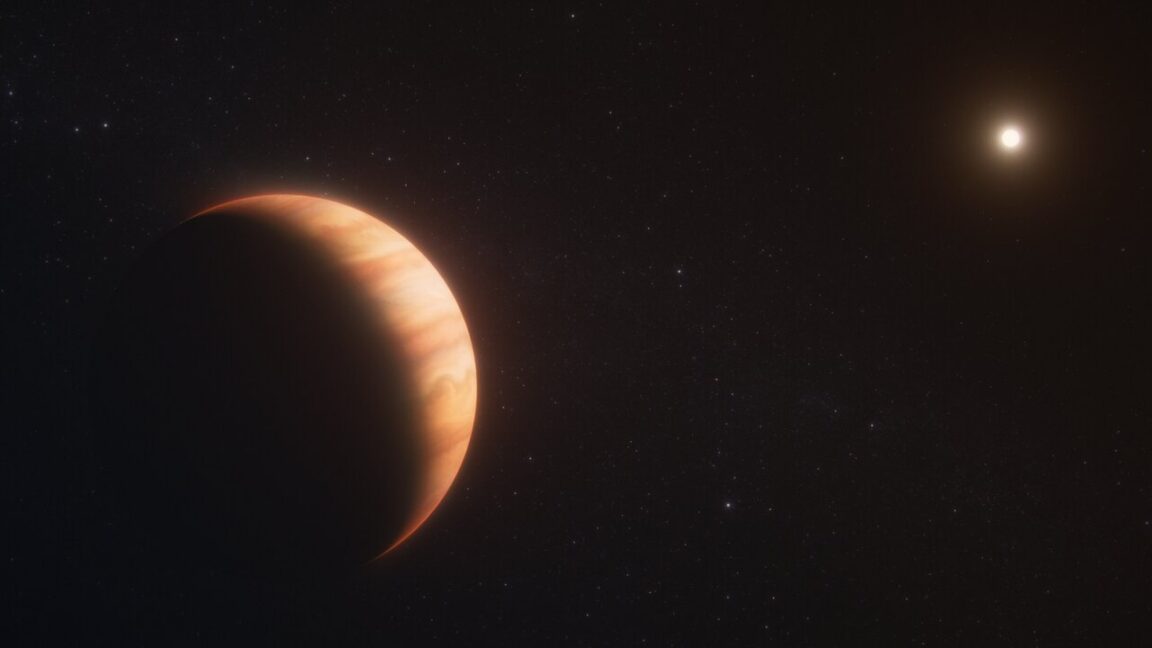
New observations from the James Webb Space Telescope have deepened the understanding of planet WD 1856 b, the only known Jupiter-size world confirmed to have survived the death of a Sun-like star. The planet orbits a white dwarf, the burnt-out remnant of a star similar to our Sun.
WD 1856 b was initially discovered by accident in 2020 when astronomers pointed the TESS observatory at approximately 2,000 white dwarfs, searching for small objects like comets or asteroids transiting their surfaces.
White dwarfs are the remains of stars that have undergone a red giant phase, primarily composed of elements like carbon and oxygen, typically Earth-sized. The detection of a gas giant in the WD 1856 system was unexpected and immediately raised questions.
"As soon as they looked at it, they said, okay, that’s weird," stated Christopher O’Connor, a theoretical astrophysicist at Cornell University and co-author of the recent study published in Nature. The latest James Webb observations provide further insight into this unusual system, making it even stranger astronomically.
The research published in Nature sheds light on the survival capabilities of planets during the extreme phases of stellar evolution.