Life potentially possible on Saturn's moon Enceladus, study finds
New research from LMU Munich suggests microorganisms could survive in the subsurface ocean of Saturn's icy moon Enceladus, despite extreme conditions.
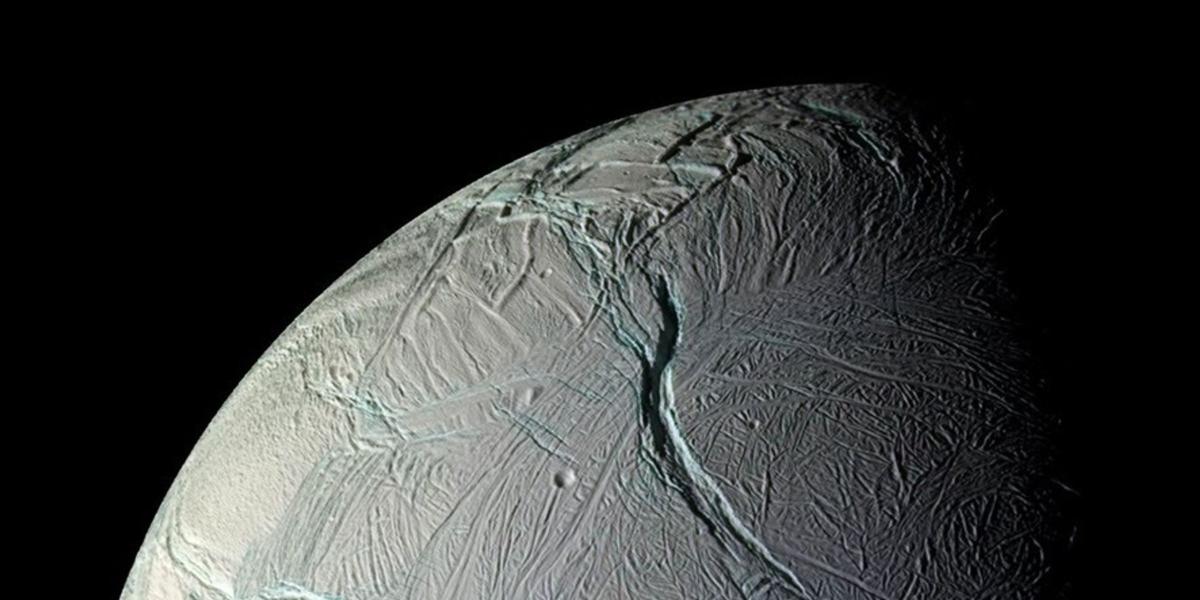
Scientists at Ludwig-Maximilians-Universität München (LMU) have found that Saturn's moon Enceladus may be more conducive to life than previously thought. New research indicates that microorganisms could potentially survive in the global ocean beneath the moon's icy crust, despite extremely challenging conditions.
Enceladus is known for its frigid temperatures, lack of oxygen, and a global subsurface ocean that is highly alkaline and corrosive. Nevertheless, the moon is considered one of the most promising locations in our solar system where conditions for life might exist. A study supervised by William Orsi, Professor of Geomicrobiology at LMU, recreated conditions thought to exist on Enceladus's seafloor in a laboratory setting. Their experiments demonstrate that certain hydrogen-consuming, methane-producing archaea can adapt to this environment.
The research utilized a specialized anoxic chamber to simulate deep-sea conditions with very low oxygen levels and high pH. Researchers introduced Methanothermococcus okinawensis, a methane-producing archaeon that normally lives near deep-sea hydrothermal vents on Earth. This organism uses one of the most ancient metabolic pathways still retained by life on Earth, requiring only H2 and CO2 for energy.
Remarkably, the organism, which failed to grow in conventional lab media at high pH, demonstrated growth in the Enceladus simulant. It was able to produce methane by utilizing hydrogen generated from water-rock reactions. The study also showed that the archaea could adapt to the extremely low concentrations of carbon dioxide present in Enceladus's ocean, a significant challenge for potential life.
The study, involving researchers from multiple institutions including the Woods Hole Oceanographic Institution and Freie Universität Berlin, was published in the journal Science Advances. These findings bolster Enceladus's status as a prime candidate in the search for extraterrestrial life within our solar system.