Lingnan University Study: Over 1,400 Hong Kong Newts Killed on Roads in Two Months
A two-month study by Lingnan University in Hong Kong found that over 1,400 Hong Kong Newts were killed on roads, highlighting the species' endangered status and the urgent need for conservation measures.
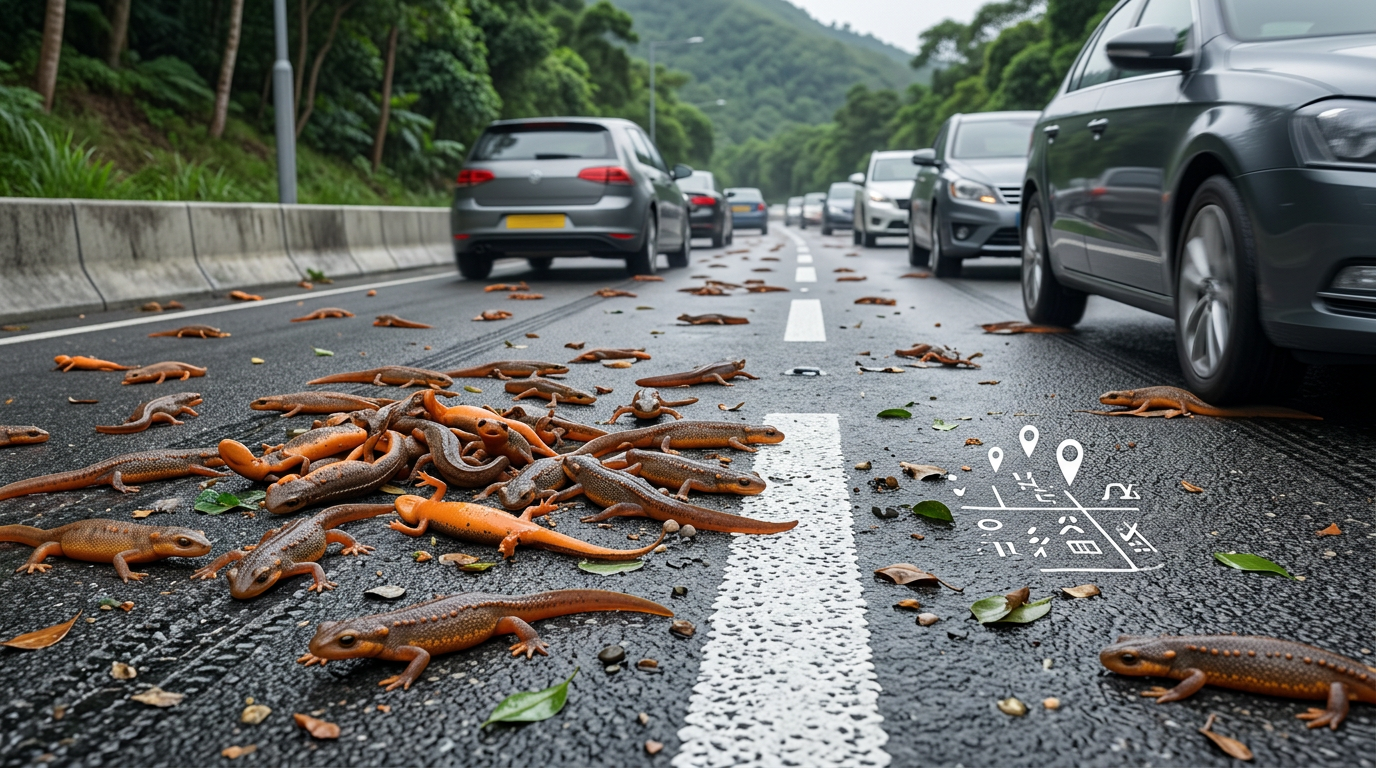
Researchers at Lingnan University have released the findings of Hong Kong's first scientific statistical survey on "roadkill" impacting the Hong Kong Newt (Paramesotriton hongkongensis). The study recorded over 1,500 animal deaths within two months, with a staggering 90 percent identified as this locally near-threatened species. The research highlights a severe survival threat for the newts, particularly during periods of heavy rainfall.
The Hong Kong Newt, a 15-centimeter-long amphibian with orange-spotted bellies, is the only newt species native to Hong Kong and is listed as Near Threatened by the IUCN. It is a protected species under Hong Kong's Wild Animals Protection Ordinance. Following their annual breeding season, the newts migrate from streams to forest habitats, and their migration routes frequently intersect with roads, leading to significant mortality from vehicle collisions.
The university's research team, bolstered by 20 citizen scientists, collected data from four identified "roadkill hotspots" between March and May 2024. The survey documented over 1,500 deceased animals, including frogs, snakes, and lizards, but the overwhelming majority, 1,427 individuals, were Hong Kong Newts.
The investigation revealed that roadkill incidents were not randomly distributed but concentrated in specific road sections. The Fei Ngo Shan area, in particular, recorded 870 newt deaths, accounting for 60 percent of all observations. Researchers estimate that thousands of Hong Kong Newts fall victim to roadkill annually.
The research team proposes mitigation strategies including traffic management and the installation of wildlife-friendly road infrastructure, such as underpasses and overpasses. They also recommend short-term solutions like temporary speed limits or road closures during peak migration periods. The goal is to protect this unique local species and raise public awareness of its vulnerable condition.