LIPSIA-STRATEGY trial confirms non-inferiority of angiography-derived vFFR
A clinical trial involving 1,053 patients demonstrates that CAAS vFFR guidance produces comparable outcomes to traditional pressure wire-based fractional flow reserve (FFR) measurements.
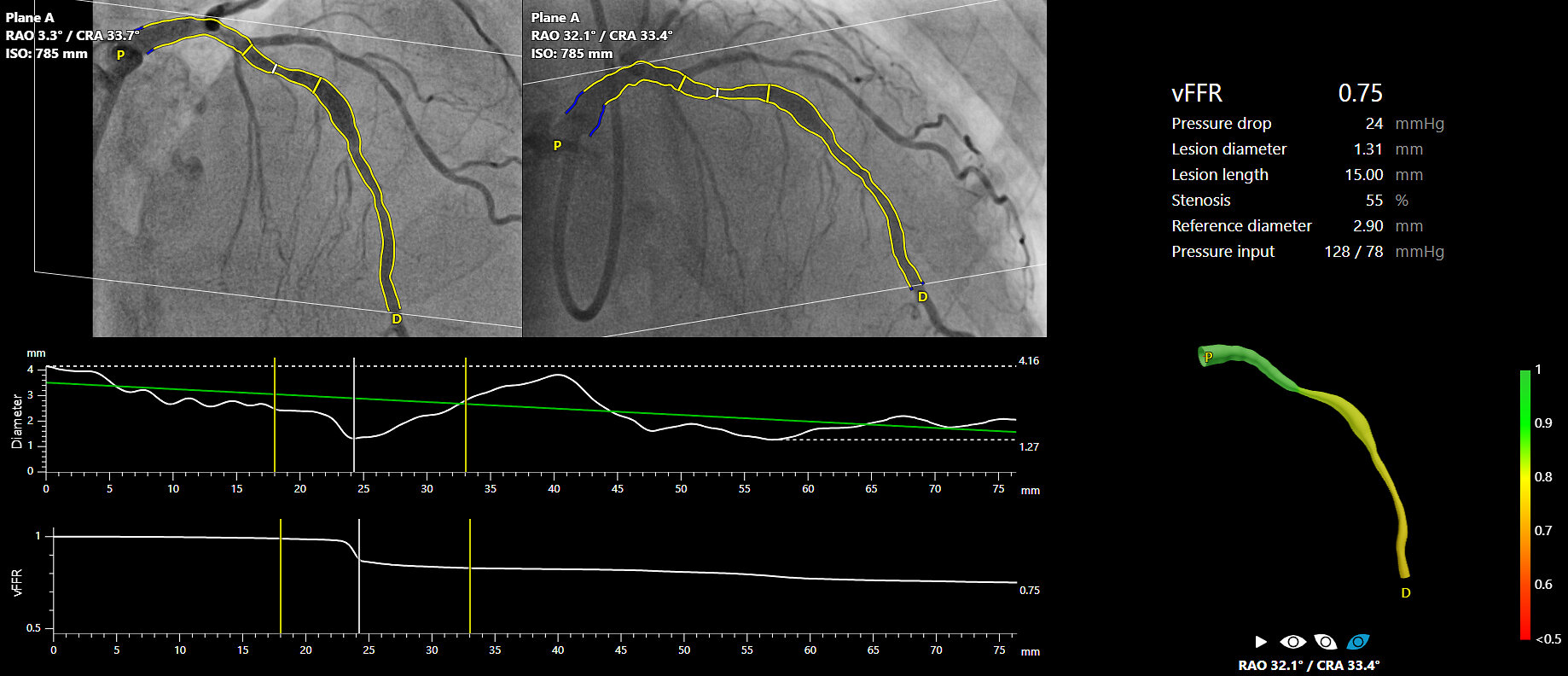
The LIPSIA-STRATEGY trial, results of which were presented at the TCT 2026 congress and published in the Journal of the American College of Cardiology, shows that angiography-derived vFFR is non-inferior to conventional pressure wire-based FFR for guiding coronary revascularization. The study evaluated 1,053 patients with intermediate coronary artery stenoses, randomized to receive treatment guided by either the CAAS vFFR software from Pie Medical Imaging or traditional pressure wire methods.
The primary endpoint focused on major adverse cardiovascular events (MACE) over one year, with results confirming clinical comparability between the two approaches. By utilizing angiography-based analysis, the procedure potentially avoids the necessity of invasive pressure wires in certain clinical scenarios.
Professor Holger Thiele, head of the study at the Heart Center Leipzig, stated that because the angiography-based measurement is more straightforward while maintaining clinical efficacy, it represents a potential shift in standard practice for managing intermediate coronary stenoses. These findings align with prior data from the FAST III trial, supporting the integration of vFFR to reduce procedure and fluoroscopy times.