LIPSIA-STRATEGY trial confirms non-inferiority of vFFR against wire-based FFR
Clinical data presented at TCT 2026 demonstrates that CAAS vFFR-guided revascularization provides comparable clinical outcomes to traditional pressure wire-based FFR.
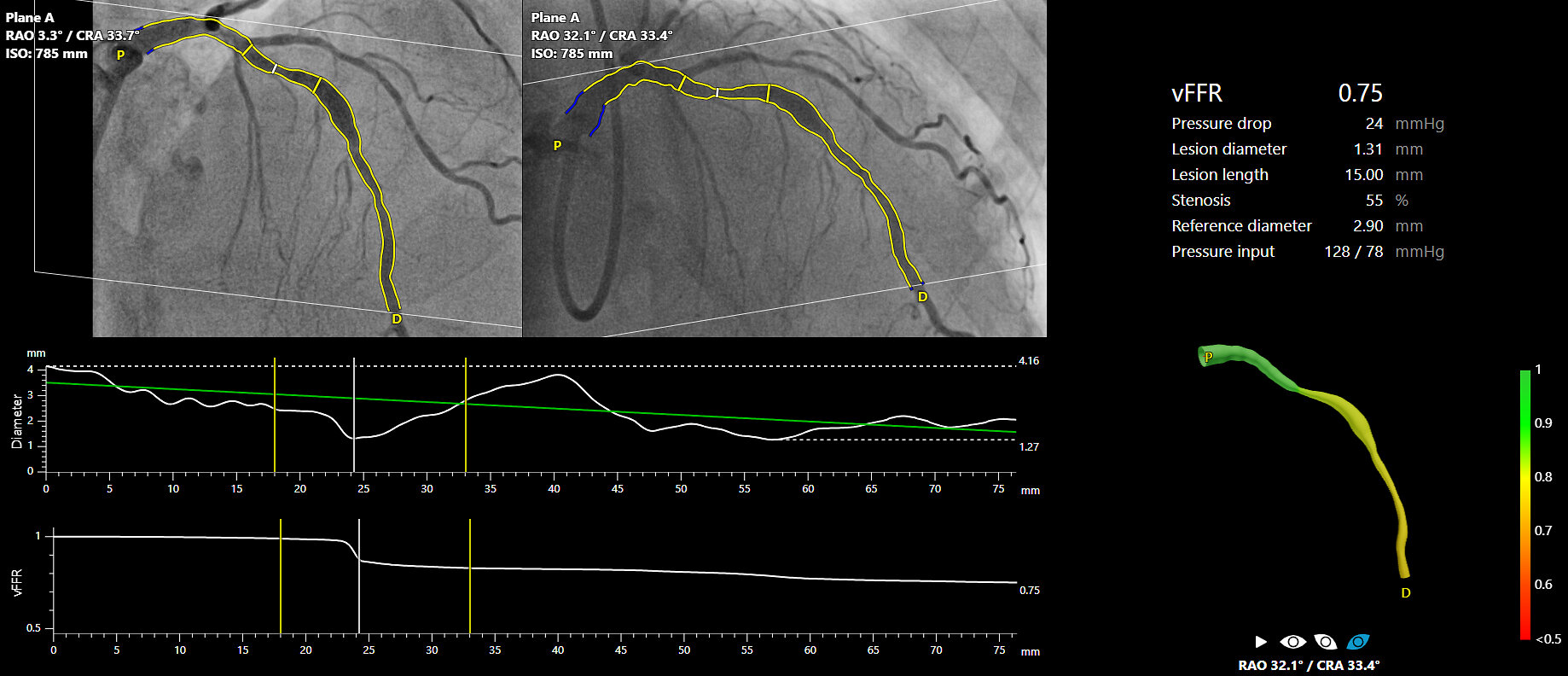
The LIPSIA-STRATEGY clinical trial has established that angiography-derived CAAS vFFR is non-inferior to traditional pressure wire-based FFR for guiding coronary revascularization. The findings were presented at the Transcatheter Cardiovascular Therapeutics (TCT) 2026 congress and simultaneously published in the Journal of the American College of Cardiology.
The study involved 1,053 patients with intermediate coronary stenoses, who were randomized to receive either vFFR-guided or FFR-guided treatment. The primary endpoint measured major adverse cardiovascular events (MACE) after one year. The results confirm that the vFFR method achieves similar clinical safety and efficacy while offering a less invasive workflow, reduced procedural time, and lower radiation exposure compared to the wire-based standard.
Professor Holger Thiele, lead investigator from the University of Leipzig, noted that the results support the adoption of angiography-derived measurements as a standard approach for intermediate stenosis. Pie Medical Imaging, the developer of the CAAS vFFR technology, stated that these findings reinforce independent clinical evidence supporting their software as a viable alternative for diagnostic and treatment planning.