Liquid Cooling to Replace Air Cooling in AI Data Centers by 2026
The escalating computational demands of AI require new cooling solutions as traditional air-cooling systems prove insufficient. Liquid cooling is emerging as the standard.
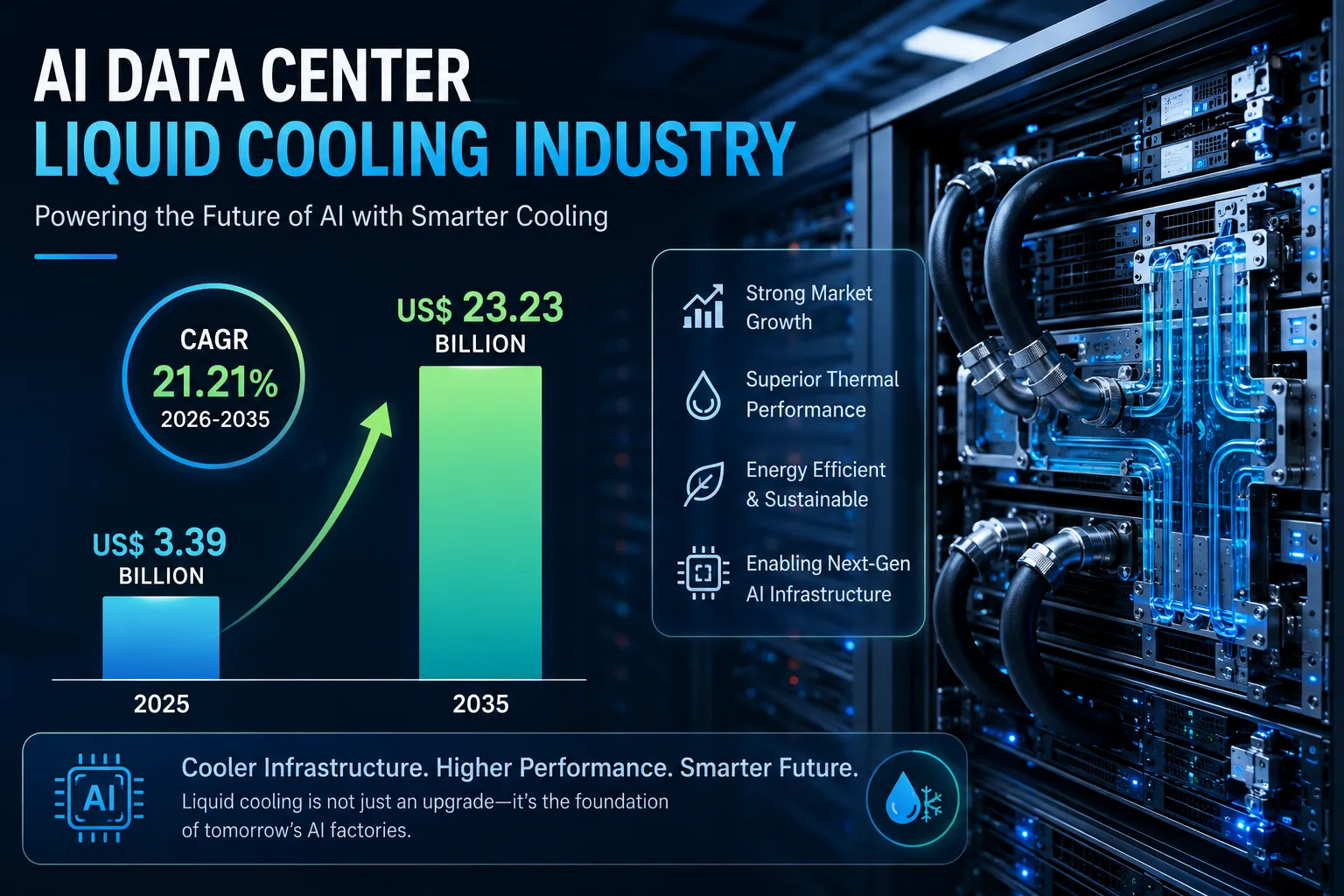
The intense computational demands of artificial intelligence are pushing data center cooling solutions into a new era. By 2026, air-cooling systems are expected to be unable to meet the needs of burgeoning AI infrastructures, necessitating a shift towards liquid cooling.
The rapid growth of AI applications, including large language models and generative AI, has significantly increased the processing power required within data centers. This surge necessitates more powerful components like GPUs and CPUs, which generate substantial heat in confined spaces. Traditional air-cooling methods, relying on fans and air handlers, are struggling to efficiently dissipate this amplified thermal load.
Hyperscale data center operators are increasingly constructing what are termed "AI factories" – facilities engineered for industrial-scale transformation of electricity into intelligence. In these environments, cooling has become a critical strategic constraint dictating the deployable AI capacity. Liquid cooling technologies, such as direct-to-chip and immersion cooling, offer superior heat transfer capabilities, enabling higher component densities.
This transition to liquid cooling is crucial for ensuring AI performance, efficiency, and reliability. Air's heat transfer capacity is proving inadequate for the intense, continuous heat loads generated by modern AI workloads, positioning liquid cooling as the forthcoming standard for AI data centers.
Industry analysis suggests that liquid cooling is moving from an optional upgrade to a mainstream requirement for high-density AI servers. Air cooling's effectiveness is diminishing as the thermal intensity of AI computations outpaces improvements in airflow efficiency.