LMU Munich marks 100 years since death of X-ray discoverer Wilhelm Röntgen
Ludwig-Maximilians-Universität München (LMU) commemorates the 100th anniversary of the death of Professor Wilhelm Röntgen. Röntgen, who discovered X-rays during his tenure at LMU, revolutionized science and medicine.
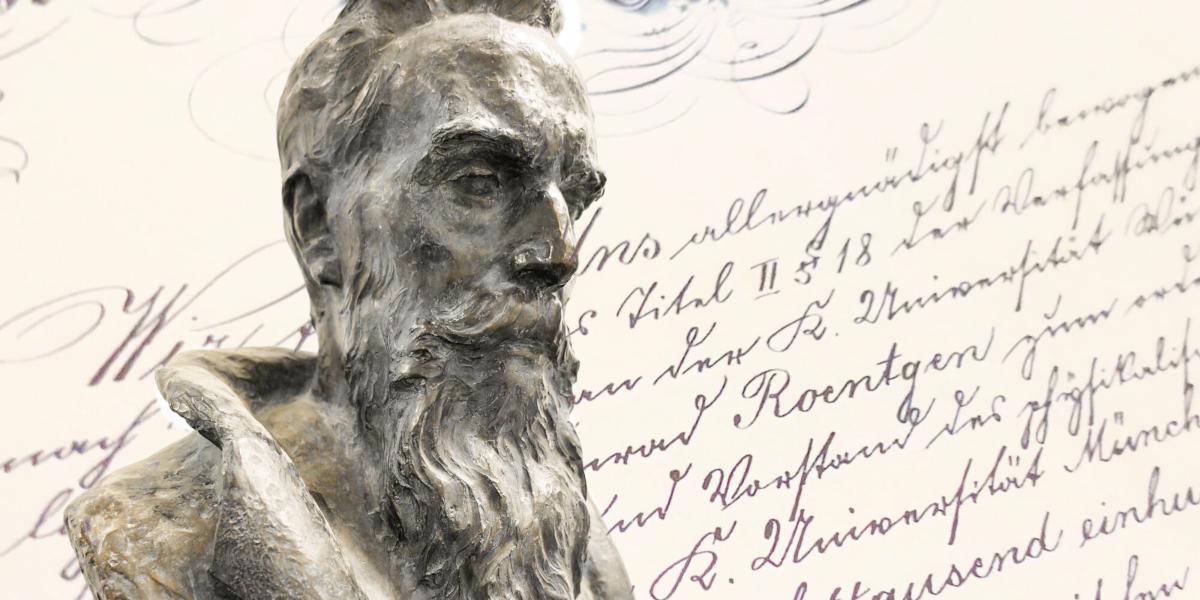
Ludwig-Maximilians-Universität München (LMU) is marking the 100th anniversary of the death of physics professor Wilhelm Conrad Röntgen. Röntgen, the discoverer of X-rays (known as "Röntgen rays" in Germany), worked at LMU for 20 years, and his findings profoundly impacted science and medicine.
Röntgen began his professorship at LMU in 1900, taking over the Chair of Experimental Physics. By this time, he had already received the inaugural Nobel Prize in Physics in 1901 for his discovery. While at LMU, Röntgen continued his diverse research interests, including thermodynamics, electrodynamics, and solid-state physics. His ongoing work on the physical properties of crystals contributed to X-rays becoming a vital tool in crystallography and the deciphering of DNA's double-helix structure.
Röntgen's discovery, often described as accidental, occurred while he was experimenting with cathode rays in evacuated glass tubes. He observed a new type of radiation that could penetrate solid objects and expose a photographic plate. This ability to "make the invisible visible" captivated the public, leading to early medical applications like imaging bones. While the scientific value of X-rays is immense, the serious health risks associated with radiation exposure were not immediately understood, resulting in severe consequences for both test subjects and scientists.
Röntgen's legacy continues to influence scientific inquiry. Today, X-rays are widely used in medical imaging, materials testing, and even in astronomy via X-ray telescopes. LMU continues to honor Wilhelm Röntgen's pioneering work, the impact of which remains evident across numerous scientific fields.