National Police Association Backs PEARL Act for Shelter Dogs
The National Police Association (NPA) announced its support for the PEARL Act (Providing Emotional Assistance with Relief and Love), a legislative initiative to adopt and train dogs from animal shelters as support animals for the agency.
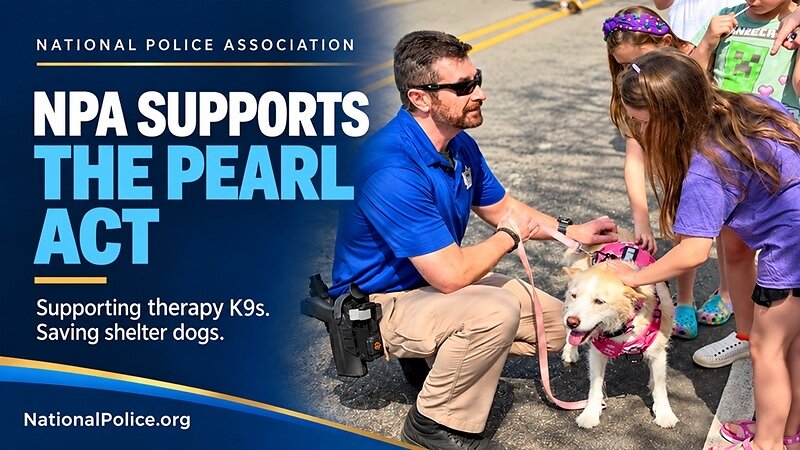
Indianapolis, Sep. 25, 2026 – The National Police Association (NPA) has publicly endorsed the PEARL Act (Providing Emotional Assistance with Relief and Love), legislation introduced by Representatives Dave Joyce, Lou Correa, and Senator Ruben Gallego, among others. The act directs U.S. Customs and Border Protection (CBP) to establish a three-year pilot program to adopt and train dogs from local animal shelters as support animals.
The legislation, which passed the House of Representatives on September 16, 2026, aims to bolster the mental well-being of CBP personnel. The program will build upon the agency's existing Support Canine Program, established in 2023, which assists employees in coping with trauma, grief, and improving morale. Named after Pearl, a former CBP support canine, the bill does not require additional appropriations, with costs to be covered by existing CBP budgets.
Paula Fitzsimmons, Legislative Director for the NPA, emphasized the bill's importance for employee welfare. "CBP personnel operate in high-risk, emotionally charged environments. Providing them with robust wellness resources is essential," Fitzsimmons stated. "A structured program that incorporates support dogs should be part of this."
The support for the PEARL Act reflects a broader recognition of the therapeutic benefits of animals. Research indicates that interacting with dogs can reduce stress and alleviate symptoms of depression and anxiety. The NPA has expressed gratitude to lawmakers for advancing the bill and urges the Senate to swiftly consider its passage, highlighting its bipartisan nature and potential to achieve both animal welfare and personnel well-being goals.