New book challenges the culture of persistence
Author and journalist Lindsay Crouse argues that knowing when to quit is a strategic tool for personal and professional development rather than a sign of failure.
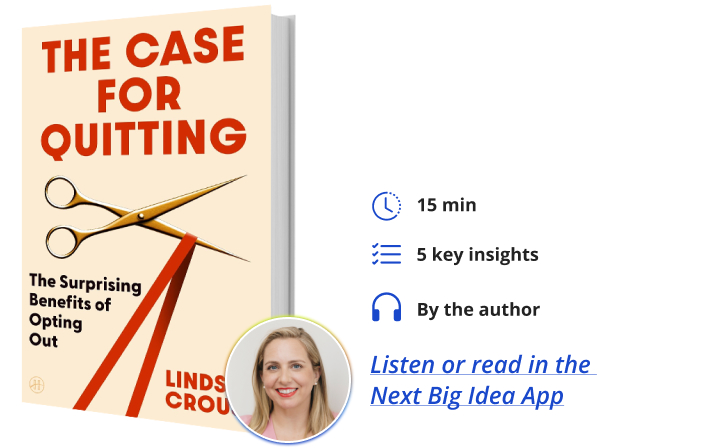
In 'The Case for Quitting,' journalist Lindsay Crouse examines the societal tendency to overvalue persistence, which she argues can lead to wasted time, energy, and resources. Crouse contends that clinging to unattainable goals often prevents individuals from redirecting their focus toward more productive and fulfilling pursuits.
Addressing the psychological barriers to walking away, Crouse points to the 'spotlight effect'—the cognitive bias where individuals assume others are paying more attention to their actions than they actually are. She argues that the fear of judgment often outweighs the reality of how others perceive one's life transitions. Furthermore, she notes that inaction and the failure to make difficult decisions often result in more long-term regret than the act of quitting itself.
Rather than advocating for impulsive departures, Crouse suggests a measured approach to changing life paths. By highlighting the early career of musician Bill Withers, she demonstrates the value of maintaining stability while exploring new ventures, allowing for a transition based on confidence and financial foundation rather than necessity.