New Federal Bill Aims to Address Silicosis Epidemic in Artificial Stone Industry
U.S. Representatives have introduced legislation that would expand screening, treatment, and education for artificial stone industry workers facing a growing number of silicosis cases.
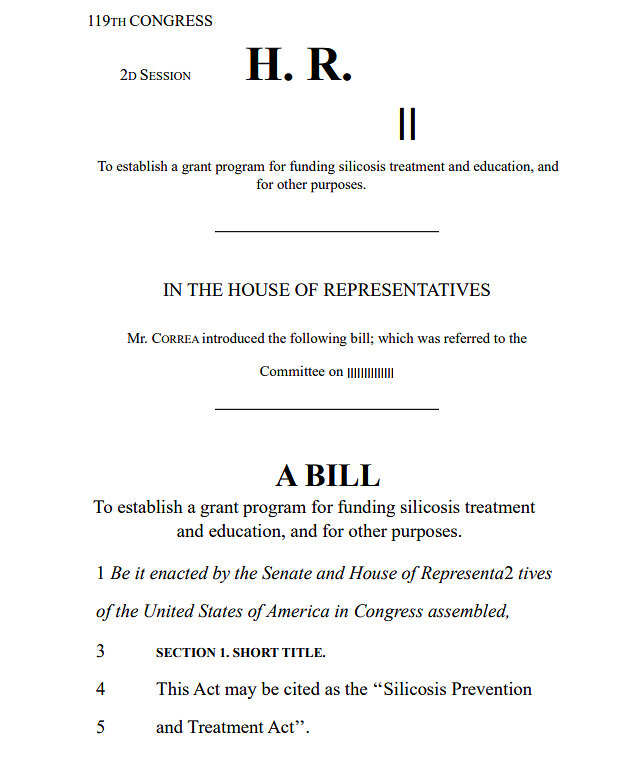
The law firm Brayton Purcell LLP is acknowledging new federal legislation intended to expand healthcare and resources for workers affected by silicosis linked to artificial stone. Silicosis is a preventable, progressive, incurable, and fatal occupational lung disease impacting artificial stone fabrication workers in California and across the United States.
U.S. Representatives Lou Correa of California and Dr. Maxine Dexter of Oregon introduced the "Silicosis Prevention and Treatment Act" on October 14, 2026. The proposed legislation would establish a federal grant program to support screening, diagnosis, treatment, education, pulmonary rehabilitation, and coordinated patient care.
The need for such legislation is particularly acute in California, where over 662 confirmed cases of silicosis have been reported, with more than 135 in Orange County. Representative Correa's district includes Anaheim's "Tile Mile," an area where many workers cut and fabricate artificial stone slabs into custom countertops. This fabrication process generates significant amounts of respirable crystalline silica dust, a known cause of the disease.
"No worker should lose their ability to breathe because of the job they do to provide for their family," Representative Correa stated. "Workers cutting artificial stone countertops are being diagnosed with silicosis at an alarming rate. This bill puts resources into the hands of clinics and hospitals caring for these workers."
The proposed bill would allocate $10 million annually for fiscal years 2027 through 2031 through a competitive grant program. Funding would be available to eligible entities such as federally qualified health centers, hospitals, and non-profit healthcare providers, who would commit to treating patients regardless of their ability to pay. The initiative aims to improve outreach, screening, treatment, and patient support nationwide.