New ICE Use-of-Force Cases Echo Questions From Book
Recent encounters involving immigration agents in Austin and Evanston have resurfaced questions about due process and the exercise of federal authority.
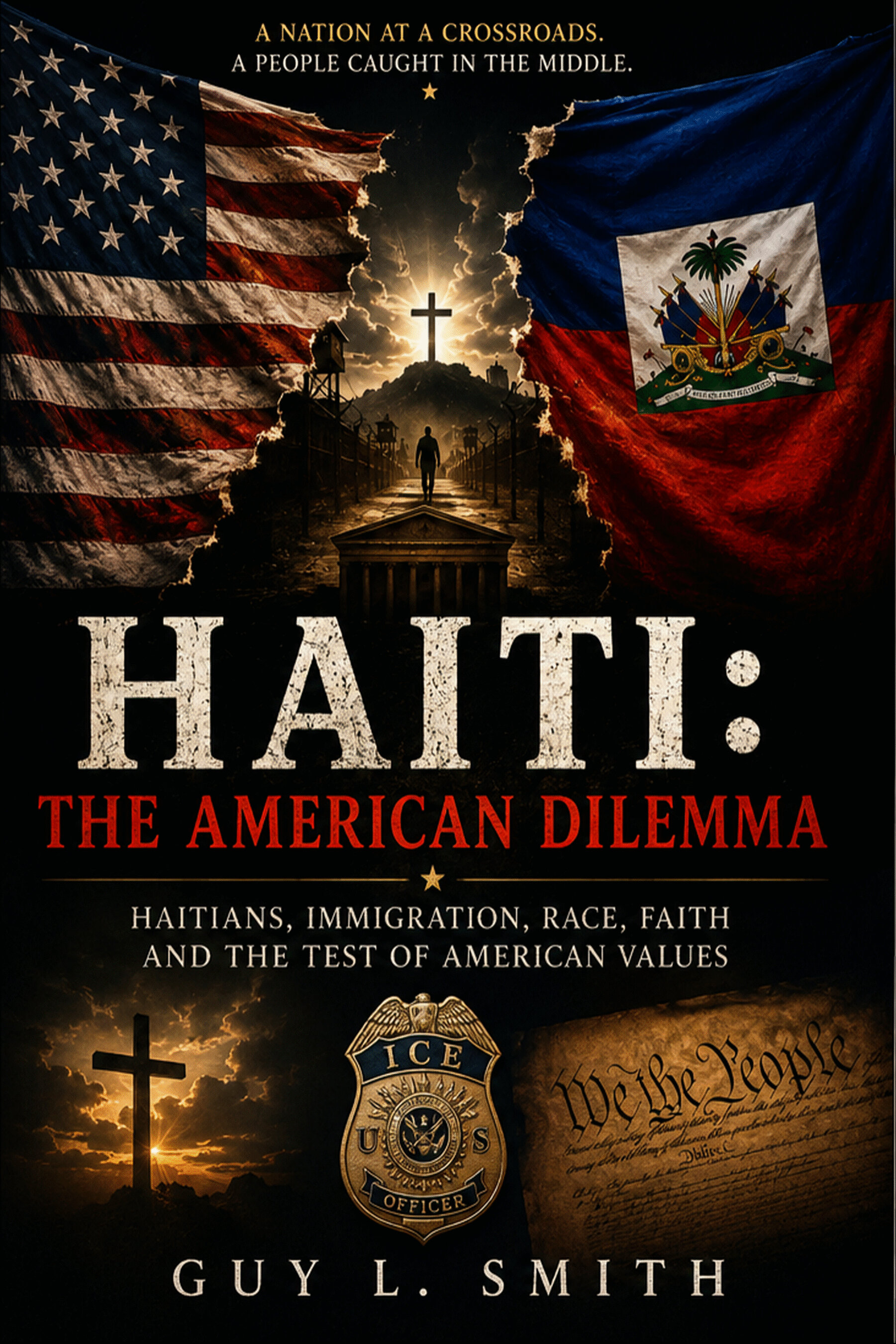
Two recent encounters involving U.S. Immigration and Customs Enforcement (ICE) agents have drawn renewed attention to issues of due process and the exercise of federal authority. An ICE agent shot a Venezuelan DoorDash driver in Austin, Texas, and federal agents mistakenly detained and injured a U.S. citizen in Evanston, Illinois. These incidents echo questions raised in Guy L. Smith's new book, "HAITI: The American Dilemma!," concerning immigration enforcement, due process, and political responsibility.
In Austin on September 20, Wilber Rafael Garcés Pérez, 28, was shot during an ICE operation while working as a DoorDash driver. Garcés' attorneys state he had a valid work permit and was in federal custody with a bullet lodged near his spine. Federal authorities contend he was subject to a final order of removal. The circumstances of the shooting are under investigation, with differing accounts of the encounter.
On the same day in Evanston, local police report that federal agents detained a man resembling a fugitive they were seeking, only to later determine he was the wrong person and a U.S. citizen. Evanston police found the man on the ground with injuries to his head, neck, and teeth. This incident also remains under investigation.
Smith's book, "HAITI: The American Dilemma!," examines the history of U.S.-Haiti relations and connects it to contemporary immigration enforcement, asylum processes, detention, deportation, race, and constitutional due process. Smith argues that vigorous immigration enforcement should not come at the expense of human dignity and due process. He emphasizes the importance of Christian conscience guiding official conduct and urges individual assessment of immigrants over categorical judgments.
The book questions how U.S. immigration policy treats immigrants from Haiti and its moral and political implications. Smith calls on U.S. leaders and citizens to critically examine their policies and ensure that power is exercised accurately, lawfully, and humanely, particularly when doing so is politically inconvenient.