New research evaluates data centers impact on electricity costs
Recent academic studies suggest that while data centers have had a minimal impact on consumer energy bills to date, strained grid capacity poses a future risk of price increases.
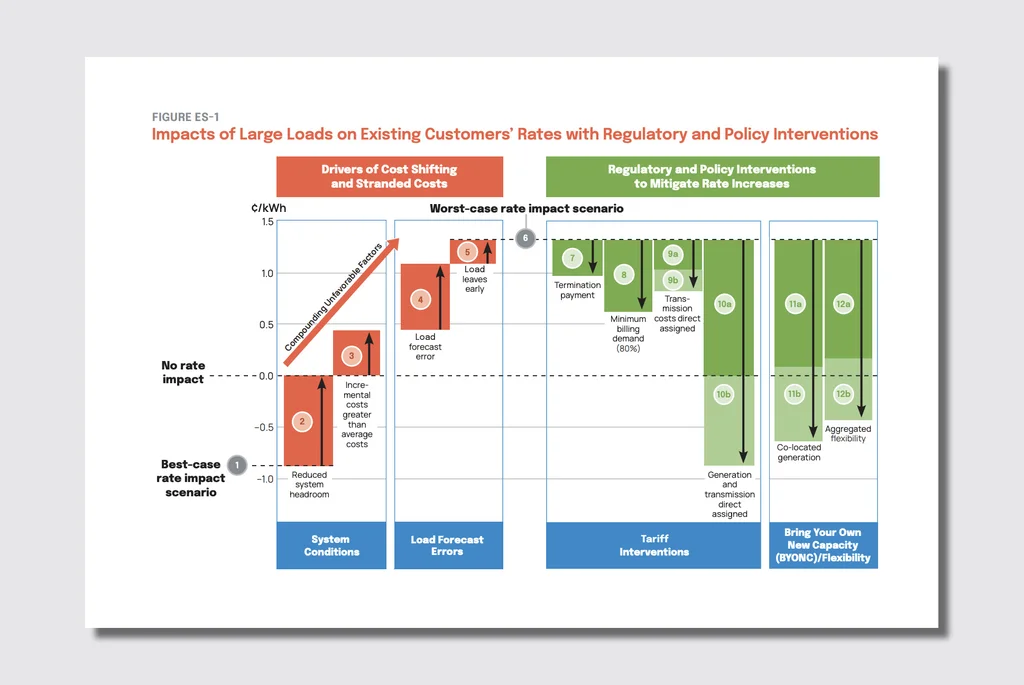
Public concern over data centers driving up utility costs has prompted recent investigations into the actual economic impact of these facilities. Findings indicate that the effect on local power grids is not uniformly negative; in energy-rich regions, increased industrial demand has occasionally allowed utilities to spread fixed costs across a larger base, effectively lowering rates.
Research from the Wharton School and Harvard Business School covering 2020 to 2025 concluded that data centers accounted for only about 4% of total residential electricity price increases. The degree of impact depends heavily on the project model. Hyperscale facilities are often more cost-neutral for ratepayers because they frequently invest directly in new infrastructure, such as wind or solar projects, rather than relying solely on existing grid capacity.
However, experts caution that this trend may shift as grid limits are tested. Organizations like the Energy Systems Integration Group (ESIG) warn that if demand exceeds supply or if infrastructure projects fail, the cost burden could fall on taxpayers. Consequently, multiple jurisdictions are now implementing stricter contractual requirements to insulate residential consumers from potential volatility.