Nobel Prize in Physics Awarded to Ferenc Krausz for Attosecond Physics Research
Professor Ferenc Krausz, Chair of Experimental Physics at Ludwig-Maximilians-Universität München (LMU), has been awarded the 2023 Nobel Prize in Physics for his work on attosecond physics.
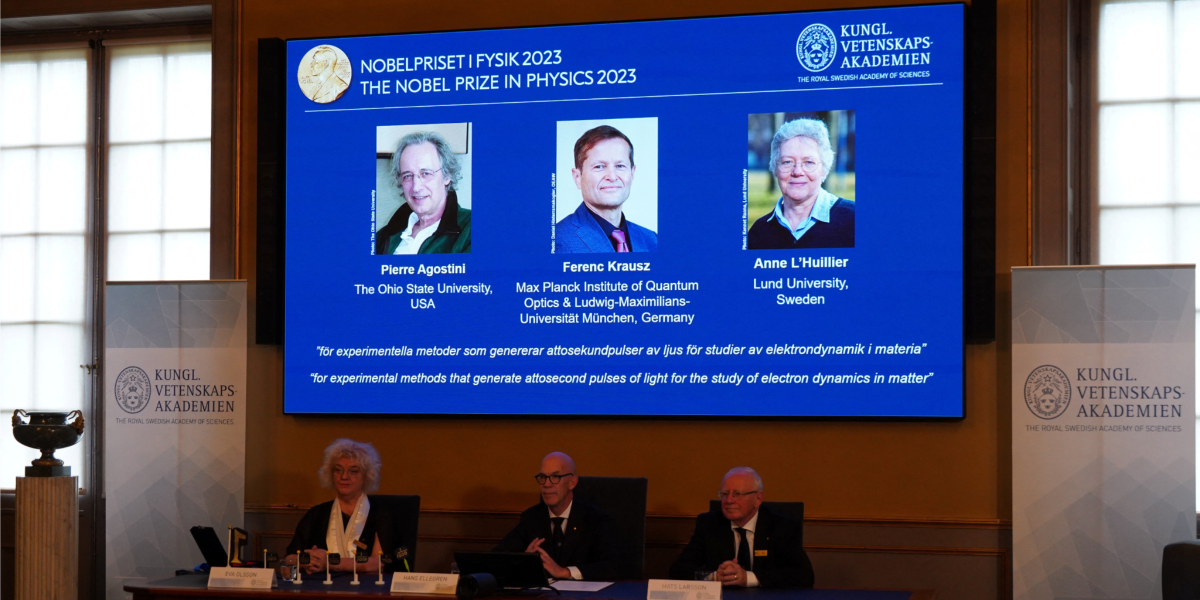
Professor Ferenc Krausz, of Ludwig-Maximilians-Universität München (LMU), has been awarded this year's Nobel Prize in Physics for developing experimental methods that generate attosecond pulses of light. He shares the award with Professor Anne L’Huillier from Lund University and Professor Pierre Agostini from Ohio State University.
The prize, announced on October 3, recognizes the trio for their contributions to the field of attosecond physics. Attosecond pulses, lasting 10⁻¹⁸ seconds, enable the study of electron dynamics within atoms and molecules in near real-time.
Krausz's research has made it possible to track the motion of electrons, the fastest processes in nature outside the atomic nucleus. These advancements hold potential for the development of faster electronic components. Furthermore, his work has led to applications in medical diagnostics, such as the early detection of specific cancer types through blood molecule analysis.
Krausz, who holds the Chair of Experimental Physics at LMU and directs a division at the Max Planck Institute of Quantum Optics, is considered a founder of attosecond physics. He expressed surprise and humility upon receiving the news, acknowledging the significance of the research conditions provided by LMU and the Max Planck Institute.