Orbital Disco Ball Yields Most Precise Test of Einstein's Relativity
A satellite resembling a disco ball has provided the most accurate measurement to date of the frame-dragging effect predicted by Einstein's general theory of relativity, reducing uncertainty to 0.2 percent.
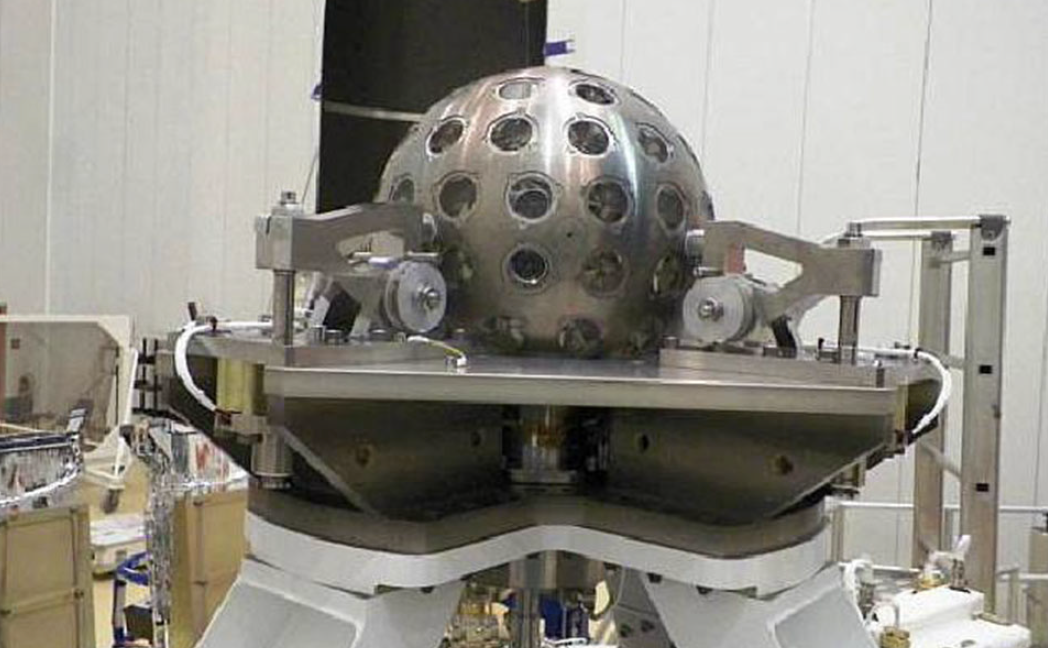
A satellite designed to test Albert Einstein's theory of general relativity has delivered the most precise measurement yet of the frame-dragging effect, also known as the Lense-Thirring effect. This phenomenon, predicted in 1918, describes how a rotating mass like Earth warps the fabric of spacetime around it.
While frame dragging is more pronounced around massive objects like black holes, measuring its effect on Earth has been a significant challenge due to our planet's comparatively smaller mass and slower rotation. Previous measurements carried a higher degree of uncertainty.
The team, led by physicist Ignazio Ciufolini of the Wuhan Institute of Physics and Mathematics, utilized a unique satellite, described as resembling a disco ball, to achieve this breakthrough. This new measurement has reduced the uncertainty surrounding the terrestrial Lense-Thirring effect to an unprecedented 0.2 percent.
The results offer further validation for Einstein's general theory of relativity, demonstrating its accuracy even in subtler gravitational interactions within our solar system. The enhanced precision of this measurement could pave the way for future, more refined tests of fundamental physics.