Panamanian Golden Frogs Moved Outdoors After 20 Years, First Step Towards Reintroduction
Critically endangered Panamanian golden frogs, absent from the wild for over two decades, have been moved to outdoor enclosures in El Valle de Antón, Panama. This marks a significant conservation step towards eventual reintroduction into their natural habitat.
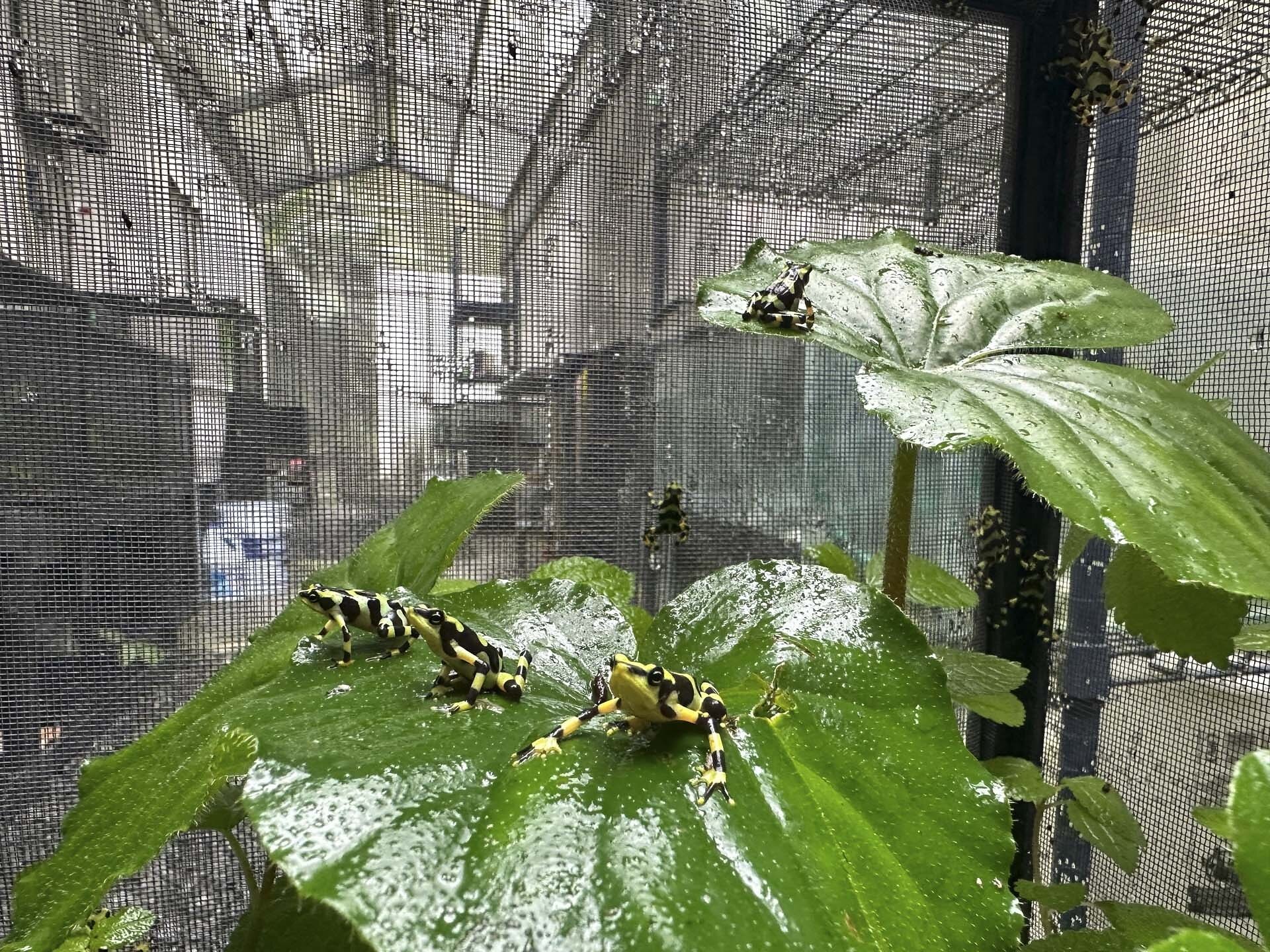
EL VALLE DE ANTÓN, Panama – A significant conservation milestone has been reached for the critically endangered Panamanian golden frog (Atelopus zeteki), as the species has been moved from indoor facilities to monitored outdoor enclosures. This marks the first time in more than twenty years that the frogs have experienced natural elements, a crucial step in efforts to return them to the wild.
Conservationists at the EVACC Foundation are now closely monitoring the frogs' development in these semi-natural settings. The initiative involves comparing growth rates of captive-bred Atelopus zeteki and Atelopus varius frogs raised in these outdoor environments versus controlled conditions. Data on how factors like temperature, rainfall, and UV exposure impact their development is considered vital for future reintroduction strategies.
The Panamanian golden frog population was decimated by chytrid fungus (Batrachochytrium dendrobatidis), leading to emergency rescue and captive breeding programs. This project is a collaborative effort supported by The Maryland Zoo, Fort Worth Zoo, Detroit Zoo, Zoo Atlanta, Seneca Park Zoo, and Project Golden Frog, an Association of Zoos and Aquariums Species Survival Plan©.
Once considered Panama's national symbol, the distinctive yellow and black Atelopus zeteki was last seen in the wild in 2009. For two decades, survival depended on secure indoor facilities to avoid the deadly fungus. This current outdoor study, conducted in shaded and screened enclosures, represents a cautious yet critical phase in understanding how to safely re-establish the species in its native habitat.