Paperboard optimisation can cut pharmaceutical packaging carbon footprint by 60%
Metsä Board's studies show that optimising fresh fibre paperboard for pharmaceutical packaging can significantly reduce its carbon footprint. Switching to Metsä Board's folding boxboard can cut emissions by up to 60%.
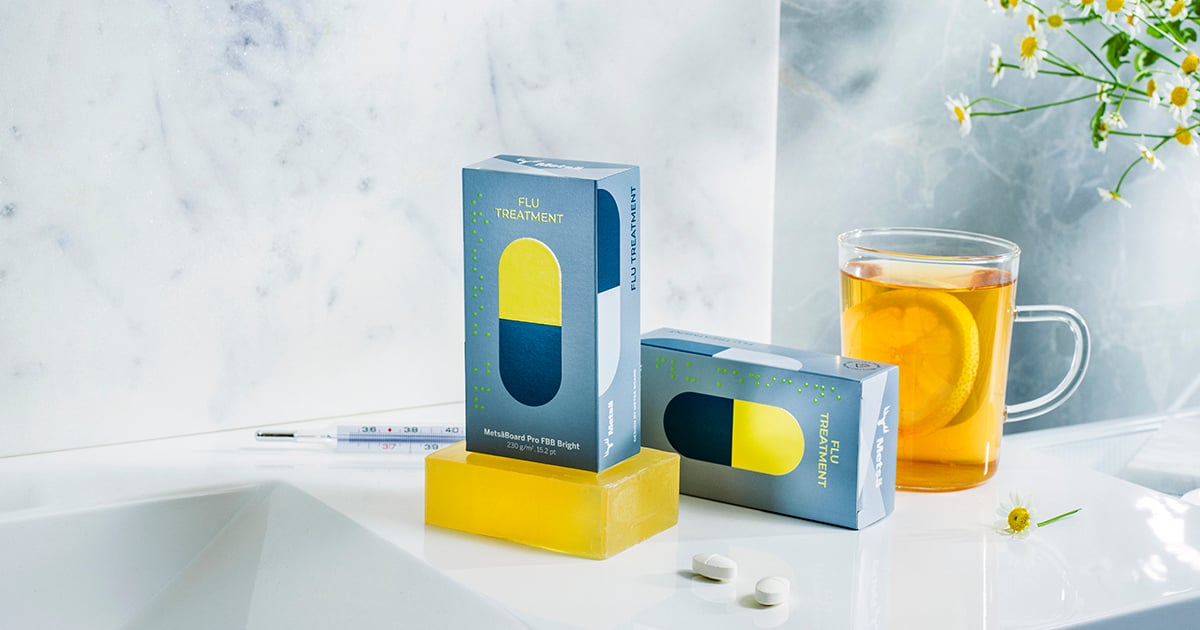
Helsinki – Metsä Board Oyj's life cycle assessments indicate that optimising the use of fresh fibre paperboard can lead to substantial reductions in the carbon footprint of pharmaceutical packaging.
The assessments found that switching from commonly used solid bleached board (SBB) to Metsä Board's folding boxboard can decrease the carbon footprint of packaging by over 50%. Replacing white lined chipboard (WLC) with Metsä Board's folding boxboard can result in reductions of 60% or higher. These findings have been verified by IVL Swedish Environmental Research Institute.
Metsä Board's folding boxboards achieve a lower carbon footprint compared to the alternatives due to the use of fossil-free energy in their production and their lighter weight. Despite the reduced weight, the paperboards maintain the durability and functional properties required for packaging.
“As a responsible materials supplier, it is our job to provide pharma brand owners with transparent, unbiased information that helps them evaluate packaging materials to make better-informed and sustainable choices to reduce their carbon footprint,” said Anne Uusitalo, Product Safety and Sustainability Director at Metsä Board. The company provides detailed information on the carbon footprint of its paperboard products and offers full life cycle assessments to its customers.