Penn State Researchers Develop Paintable E-Tattoo Technology for Biosensing
Scientists at Pennsylvania State University have developed a novel conductive ink that can be painted directly onto the skin, serving as a functional electrode for biomonitoring after drying.
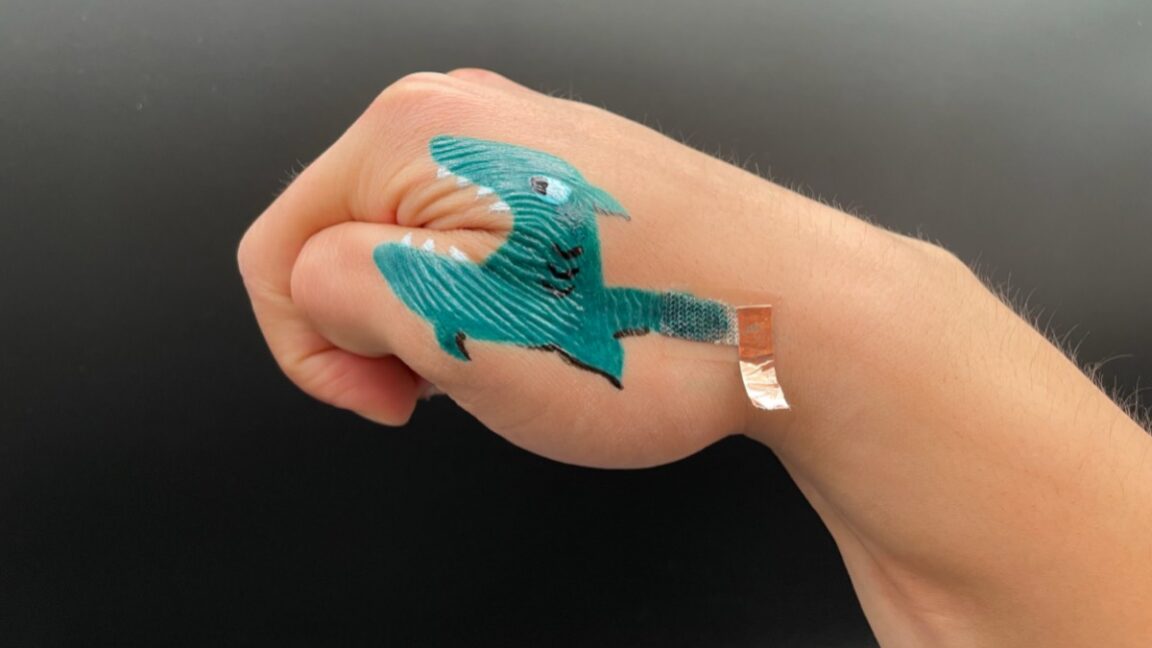
Researchers at Pennsylvania State University have created a new type of conductive ink that can be painted directly onto the skin in colorful designs. Once dried, the ink functions as an electrode capable of monitoring biological signals.
The technique, detailed in a new paper in the Proceedings of the National Academy of Sciences (PNAS), builds upon existing epidermal electronics known as e-tattoos.
Traditional e-tattoos, developed over the past decade, adhere to the skin without the need for adhesives and are virtually unnoticeable. They measure electrical signals, along with other parameters like temperature and strain, using ultra-thin polymers with embedded circuit elements.
The new paintable e-tattoo technology aims to overcome limitations of previous iterations. Earlier e-tattoos struggled with performance on curved or hairy surfaces, and required custom electrode placement for monitoring larger, spatially distributed biosignals. This new approach offers greater versatility.
Previous related developments include conductive inks designed to measure brain waves through hair. The Penn State technology could potentially enable mobile EEG monitoring outside of clinical settings and other applications.